Introduction
Your septic system is failing right now, and you won’t know until it’s too late. Hidden septic system damage develops silently beneath your property; corroding tank walls, clogging drain fields, and destroying critical components while everything looks perfectly normal above ground. Most homeowners only discover the problem when sewage backs up into their homes or their yards turn into contaminated swamps. By then, the septic system deterioration has already cost you years of system life, and the repairs aren’t cheap. At Crews Environmental, we’ve spent 40 years uncovering these invisible threats across Southwest Florida, and we know exactly how to stop them before they destroy your investment.
Understanding where septic system wear and tear happens is the first step to protecting your property. This blog reveals the hidden damage that silently shortens your septic system’s lifespan and shows you exactly what to do about it.
Internal Wear You Can’t See From the Surface
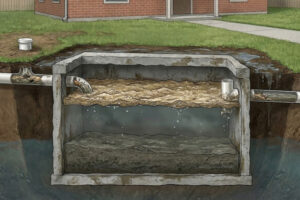
What looks like a solid concrete tank from the outside is often crumbling from within. The damage starts where you’ll never see it, and it’s happening right now.
How This Damage Actually Starts
Every time waste enters your tank, bacteria release hydrogen sulfide gas during decomposition. This gas attacks concrete from the inside like acid, working 24/7 on your tank walls and ceiling. Steel reinforcement bars rust through. Critical baffles that direct flow and prevent solids from escaping corrode and break off without warning.
We’ve pulled completely detached baffles from tanks during routine inspections. The homeowners had no idea anything was wrong, but their drain fields were already clogged with solids that should never have left the tank.
Component | What It Does | What Happens When It Fails |
| Inlet/Outlet Baffles | Direct flow, trap solids | Solids flood your drain field |
Tank Walls | Contain wastewater | Leaks and groundwater infiltration |
| Effluent Filters | Screen particles | Treatment efficiency drops |
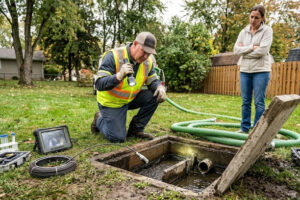
What you need to do: Get a septic system inspection if your system is over 10 years old or if you’ve never had an internal exam. At Crews Environmental, we use cameras and specialized equipment to check components you can’t see. We catch failures before they destroy your drain field.
A professional inspection today prevents a complete system failure tomorrow.
Drain Field Stress Below Ground
Your drain field processes every gallon of wastewater your household produces. It’s also the most expensive component to replace, and it’s under more stress than you realize.
How This Damage Actually Starts
Every time effluent enters your drain field, a biological layer called biomat forms where wastewater meets soil. When your tank sends partially treated water and microscopic solids into the field, the biomat thickens dramatically. It transitions from a helpful filter to an impermeable barrier that blocks absorption completely.
By the time you notice wet spots on your lawn, the biomat has already destroyed the soil’s absorption capacity. Soil compaction makes everything worse; vehicles driving over your drain field compress the soil, cutting off oxygen to the bacteria that treat wastewater naturally.
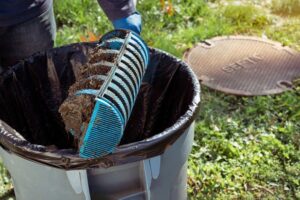
Root intrusion is another silent killer. Trees and shrubs send roots seeking water and nutrients; your septic system is an irresistible target. Roots enter through tiny cracks and expand inside pipes, forming dense mats that block flow completely. We’ve excavated drain field pipes containing root masses that took years to develop without any visible symptoms.
Common Southwest Florida plants that destroy drain fields:
- Royal Palms (roots spread 50+ feet)
- Banyan Trees (aggressive root systems)
- Bamboo (invasive runners)
- Large Oak Trees (extensive networks)
Your action plan: Map your drain field location and keep trees at least 30 feet away. Never allow vehicles in the area. If you have mature trees nearby, talk to us about root barriers during your next professional septic maintenance visit.
Bacterial Imbalance Inside the System
Your septic tank is a living ecosystem. Billions of beneficial bacteria break down waste and keep everything functioning. Kill these bacteria, and your system stops working.
How This Damage Actually Starts
Most homeowners poison their systems daily without realizing it. Antibacterial soap kills tank bacteria. Chlorine bleach sterilizes the biological environment your system needs. Paint thinner, harsh drain cleaners, flushed medications; all create a chemical wasteland inside your tank.
Beneficial bacteria die rapidly when exposed to these chemicals. Solid waste stops decomposing at normal rates. The sludge layer thickens quickly, reducing your tank’s effective volume. Tanks that should need pumping every few years suddenly require emergency service annually.
Product Type | Impact on Bacteria | Long-term Effect |
| Chlorine Bleach | Kills 40-60% | Annual pumping needed |
Antibacterial Cleaners | Kills 30-50% | Accelerated sludge buildup |
| Chemical Drain Cleaners | Kills 70-90% | Near-total bacterial death |
If it kills bacteria in your kitchen, it kills bacteria in your tank.
What to do now: Switch to septic-friendly products immediately. Use vinegar, baking soda, and enzyme-based cleaners. Limit bleach to essential disinfection only. Never pour paint, solvents, or medications down drains. These aren’t suggestions—they’re requirements for reaching your full septic system lifespan.
Water Usage That Quietly Overloads the System
Too much water is your septic system’s biggest enemy. Your drain field can only process so much daily, and exceeding that limit destroys it.
How This Damage Actually Starts
Your tank needs 24-48 hours for solids to settle, oils to float, and liquid to clarify before entering the drain field. Excessive water floods the system and collapses this retention time. Wastewater rushes through in hours instead of days. Solids don’t settle; they get pushed directly into your drain field, causing irreversible septic system wear and tear.
A single leaking toilet can discharge 200-700 gallons daily. That’s thousands of gallons weekly through a system designed for a few hundred gallons per day. The hydraulic overload cuts your septic system’s lifespan by decades.
Silent water wasters are killing your system:
- Leaking toilets: Can waste 700 gallons daily
- Outdated washing machines: Use 40 gallons per load vs. 15-25 for modern models
- Long showers: A 20-minute shower uses 50 gallons
- Water softeners: Discharge 50-100 gallons of salt water per cycle
Immediate action required: Fix every leak now. Install high-efficiency fixtures. Take shorter showers and spread heavy water use throughout the week. If you have a water softener, ensure it discharges separately from your septic system.
Ignored Maintenance Allows Damage to Spread
Skipping routine septic maintenance doesn’t save money; it costs you exponentially more later. Every delayed service allows hidden septic system damage to compound.
How This Damage Actually Starts
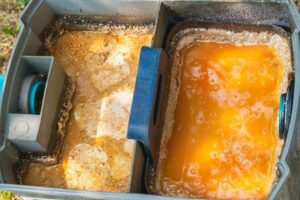
Septic tanks fill with sludge at predictable rates. When sludge grows too thick, it reduces your tank’s effective volume. Eventually, sludge reaches the outlet baffle, and every flush sends partially decomposed waste directly into your drain field. This contamination accelerates rapidly; your drain field can go from fully functional to completely failed within months.
The EPA recommends pumping every 3-5 years, but many Southwest Florida homes need service every 2-3 years, depending on usage. Homeowners have called for their first pump-out in 8–10 years because “everything seems fine.” We find broken walls, detached baffles, and drain fields that aren’t working.
Maintenance Schedule | System Lifespan | Major Repair Risk |
| Every 3 years | 30-40 years | 15-25% |
Every 5-7 years | 20-30 years | 40-60% |
| Every 8-10 years | 15-25 years | 70-85% |
Never/Emergency only | 10-20 years | 95-100% |
What a Professional Inspection Can Uncover:
- Exact depths of sludge (let us know when you need to pump)
- Baffle condition (keeps the drain field clean)
- Tank structural integrity (catches cracks early)
- Drain field performance (identifies problems early)
Take action now: If you haven’t had service in 3 years, contact Crews Environmental today. We provide transparent pricing and detailed scopes of work that explain exactly what your system needs.
Protect Your System Before It’s Too Late
Hidden septic system damage is destroying investments throughout Fort Myers, North Cape Coral, Bonita Springs, Naples, Lehigh Acres, San Carlos Park, and Captiva right now. Internal corrosion, drain field stress, bacterial death from chemicals, hydraulic overload from excessive water, and delayed maintenance; these invisible threats cut your septic system’s lifespan from 40 years to 15 or less. The septic system deterioration happening beneath your property won’t announce itself until you’re facing sewage backups and contaminated yards.
At Crews Environmental, we’ve provided expert septic repair services, preventative septic care, and septic system inspections for 40 years. Our septic maintenance company operates 24/7, 365 days a year across Southwest Florida. We don’t just pump tanks; we protect your investment through comprehensive septic system upkeep that addresses problems before they escalate. Our mission is to provide the best service with complete transparency, backed by clear pricing and detailed work scopes.
Don’t wait for warning signs; they show up after the damage is done. Call Crews Environmental at 239-766-5469 today to schedule your inspection. Fix leaks immediately, switch to septic-friendly products, monitor water usage, protect your drain field, and schedule regular pump-outs. Your septic system works hard every day. Give it the long-term septic system care it deserves. Contact us now at 239-766-5469.