Grease trap buildup doesn’t announce itself with flashing lights. Your drains seem fine one day, then suddenly you’re dealing with a flooded kitchen right when service hits its peak. What really gets restaurant owners in trouble isn’t the mess they can see—it’s the FOG buildup (fats, oils, grease) that’s been hardening inside those pipes for months without anyone noticing. By the time you spot the problem, serious plumbing system damage has already taken root.
We’ve watched this same story unfold countless times at Crews Environmental, and honestly, most of it could’ve been avoided with consistent grease trap maintenance.
Here’s what actually happens when grease accumulation in pipes goes unchecked, the red flags people overlook, and why trying to save money on grease trap cleaning ends up costing way more down the road.
What Grease Trap Buildup Actually Is
Think about what happens every time you wash dishes. Hot water pushes grease down the drain, and everything seems fine. But once that grease cools off, it starts sticking to whatever it touches. Commercial grease traps catch most of this stuff, but not everything.
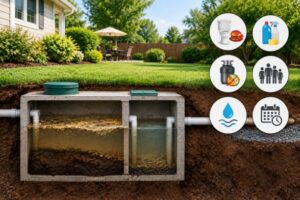
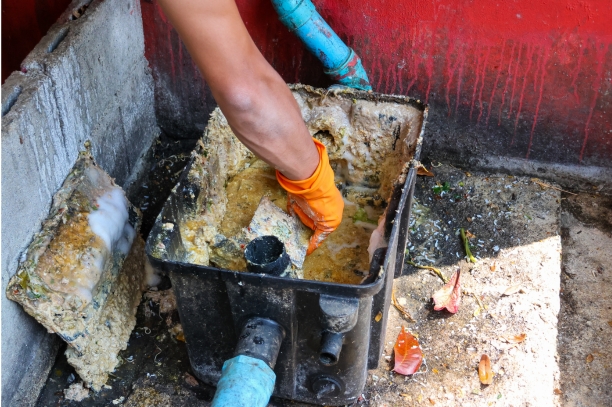
- How Fats, Oils, and Grease Accumulate Over Time -FOG buildup (fats, oils, grease) builds up gradually. Hot grease flows in as liquid, then splits apart as temperatures drop. Lighter oils float on top while heavier fats sink and mix with food scraps. Every wash adds another thin coat. Give it a few weeks, and you’re looking at inches of solidified gunk inside your trap.
- Why Grease Traps Fail Long Before They Look Full -Here’s what most people miss: commercial grease traps start failing at just 25% capacity. Past that point, your trap can’t separate grease from water properly. So where does the extra grease go? Straight into your plumbing. Hardened grease deposits stick to walls and baffles where you can’t see them, letting dirty water sneak past without getting filtered.
REALITY CHECK: Your trap might be 70% compromised while looking only 30% full.
How Grease Buildup Restricts Plumbing Flow
Grease accumulation in pipes acts like plaque building up in blood vessels. Every time grease flows through, a microscopic layer gets left behind. Your 4-inch pipe starts functioning like a 2-inch pipe in just months.
- Pipe Narrowing and Reduced Drainage Capacity –The scary part is how slowly this happens. You won’t notice until clogged commercial drains become part of your everyday routine. Water drains more slowly, which makes the problem worse because there’s more time for grease to stick. Pipes at 70% capacity handle regular business fine—until a busy Friday hits.
- Pressure Buildup Inside Commercial Plumbing Lines -Narrow pipes mean pressure builds up behind blockages. That pressure concentrates at weak spots like bends and joints. We’ve seen grease-related pipe blockages create enough pressure to rupture old connections during service rushes.
The Chain Reaction Grease Traps Trigger in Plumbing Systems
Once one part fails, it kicks off a whole series of problems. This chain reaction explains why infrequent grease trap cleaning turns into such an expensive headache.
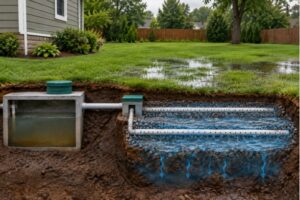
- Blockages Moving Beyond the Grease Trap –When grease trap buildup gets overwhelming, untreated grease makes its way into the main lines. It keeps moving until it hits a curve where things slow down. There it cools, hardens, and starts grabbing food particles. Before you know it, there’s a blockage forming 50 feet from your kitchen.
- Backflow Into Sinks, Floors, and Equipment –Sewer line obstruction leaves wastewater with nowhere to go except backwards. Multiple sinks and your dishwasher all running at once? That pressure shoves contaminated water right back up through your floor drain. The moment that gray water touches food prep surfaces, you’re dealing with health code violations, no matter how fast you clean up.
Neglect Timeline | What’s Happening | What You See |
| Weeks 1-8 | Grease coating pipes | Nothing unusual |
Months 3-4 | 40% capacity loss | Occasional slow drains |
| Months 5-6 | Multiple blockages | Frequent backups |
Month 6+ | System-wide failure | Emergency shutdown |
Long-Term Damage Caused by Grease Trap Neglect
Blockages are annoying. But the real financial hit comes from plumbing system damage requiring complete pipe replacement.
- Corrosion and Premature Pipe Failure -Pipe corrosion from grease happens through chemistry and biology combined. Bacteria living in FOG buildup (fats, oils, grease) produce sulfuric acid as they break down organic material. That acid eats through metal pipes, turns PVC brittle, and wears down seals. We’ve replaced 20-year-old pipes that should’ve lasted decades—all because of improper grease disposal habits.
- Damage to Municipal Sewer Connections -Grease accumulation in pipes doesn’t stop at your property line. When hardened grease deposits show up in city sewer lines, officials trace them back. You’re on the hook for cleanup costs, environmental fines, and possibly license issues.
Health and Compliance Risks From Grease Trap Buildup
Grease trap buildup doesn’t just wreck plumbing—it puts your business license at risk too.
- Foul Odors and Bacterial Growth -The smell of rotten eggs coming from dirty commercial grease traps? That’s hydrogen sulfide from decomposing material. Active bacterial colonies are thriving, and air quality suffers. Your staff notices. Your customers definitely notice.
- Health Code Violations and Failed Inspections -Inspectors always check grease trap maintenance records. Missing paperwork triggers violations even when your trap looks decent. Serious violations shut you down on the spot.
When Grease Buildup Turns Into an Emergency
Some issues develop gradually. Others go from “slightly annoying” to “full crisis” in hours—typically when you’re slammed.
- Sudden Sewer Backups During Peak Hours -Friday night, completely booked. Kitchen sinks back up one after another. Dishwasher won’t drain. Floor drains overflow. Clogged commercial drains that were just slow this morning have stopped entirely. We get these panic calls all the time at Crews Environmental—that’s why we stay available 24/7.
- Business Shutdowns Due to Plumbing Failures –When grease-related pipe blockages force you to close, losses pile up fast. Revenue from cancelled tables, staff going home without pay, and food spoiling. Emergency repairs run three to five times what regular maintenance costs.
THE MATH: Emergency service costs 3-5X more than prevention. Every time.
Why DIY or Infrequent Cleaning Makes Things Worse
Trying to save money through bare-minimum grease trap maintenance usually costs more, not less.
- Partial Cleaning Leaves Hardened Grease Behind -Pumping just the top layer might look like progress, but hardened grease deposits stuck to walls stay right there. You’re losing 30-50% of actual capacity, and everything builds back faster.
- False Sense of Safety After Surface-Level Service -The real danger is thinking you’re all set when you’re not. Business owners see some material removed and assume everything’s fine. On the other hand, grease accumulation in pipes keeps happening downstream.
Why Professional Grease Trap Cleaning Matters for Your Plumbing
Real grease trap maintenance keeps your whole plumbing system safe by doing thorough work and setting up regular service.
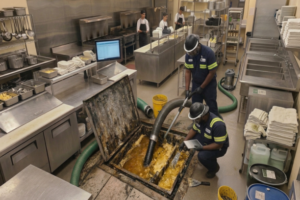
- Complete Removal of Built-Up FOG -Professional grease trap cleaning means using industrial vacuum equipment to remove everything—liquid and solid. We scrape every surface, pull out all bottom sludge, and verify proper flow. Complete FOG buildup (fats, oils, grease) removal means problems take much longer to return.
- Maintenance Schedules That Prevent System Damage -High-volume kitchens need monthly visits. Moderate-volume places should schedule every two months. No trap should go longer than 90 days between cleanings. Consistent schedules prevent that cycle where you wait too long and end up with emergencies.
Signs Your Plumbing Is Already at Risk
Catching warning signs early stops small problems from turning into big ones.
- Slow-Draining Pipes and Gurgling Sounds -Water sitting in sinks longer than normal, strange bubbling sounds, and multiple drains acting up at the same time are all signs that grease accumulation in pipes is reducing their capacity. Gurgling noises mean that air is stuck behind things that are only partially blocked.
- Persistent Odors That Won’t Disappear -When bad smells return days after service, you’re dealing with hardened grease deposits in pipes beyond the trap, or compromised pipes letting sewer gas leak through. The problem extends past your grease trap.
Protecting Your Investment
Grease trap buildup wrecks commercial plumbing in predictable patterns. FOG buildup (fats, oils, grease) becomes hardened grease deposits, causing sewer line obstruction and pipe corrosion from grease. Clogged commercial drains lead to backflow, while infrequent grease trap cleaning lets grease accumulation in pipes destroy infrastructure. Improper grease disposal and skipped grease trap maintenance result in plumbing system damage, health violations, and grease-related pipe blockages when you’re busiest.
At Crews Environmental, we’ve been protecting commercial plumbing systems across Southwest Florida for 40 years. Our team handles grease trap cleaning in Fort Myers, North Cape Coral, Naples, Captiva, San Carlos Park, FL, Lehigh Acres, and Bonita Springs. Our main goal is to get rid of all the FOG, set up regular maintenance that works for your kitchen, and respond quickly when something goes wrong.
Don’t wait for slow drains to turn into emergency shut offs.
Call Crews Environmental at 239-329-8996 for professional grease trap cleaning that keeps your kitchen running and protects your investment.