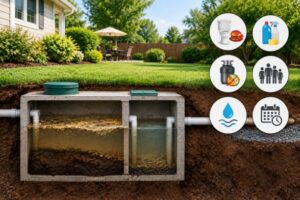
A septic system usually works quietly in the background. Water drains, toilets flush, and life continues without much thought about what is happening underground. Because everything seems normal, many homeowners assume their system is functioning properly.
The reality is often very different.
Inside the septic tank, waste begins to accumulate from the first day the system is used. Over time, solids settle at the bottom, grease rises to the top, and the tank slowly fills with material that cannot break down completely. Without routine septic tank pumping, these layers continue growing until the system begins to struggle.
Many septic problems do not appear suddenly. They develop gradually, often without obvious warning signs. A homeowner in Fort Myers, Bonita Springs, Lehigh Acres, or San Carlos Park may notice nothing unusual for years. Then one day, the drains slow down, unpleasant odors appear, or wastewater backs up.
According to the U.S. Environmental Protection Agency, more than 21 million homes across the country run on septic systems, and neglected maintenance is one of the leading reasons those systems break down.
Understanding what actually happens inside a septic tank that hasn’t been pumped for long periods can help homeowners avoid expensive repairs and protect the long-term health of their system.
How Septic Tanks Are Designed to Work
A septic tank has a straightforward job, but it is an important one. It separates solid waste from wastewater, allowing partially treated wastewater to flow safely into the drain field.
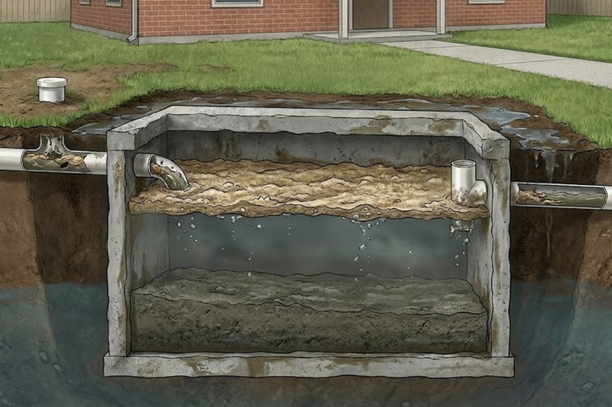
Inside the tank, the wastewater naturally separates into three layers.
Layer | What It Contains | Where It Forms |
| Scum | Grease, oils, and floating waste | Top layer |
Liquid | Partially treated wastewater | Middle |
| Sludge | Heavy solids and organic material | Bottom |
The tank holds everything long enough for bacteria to break down the organic waste inside.
However, some solids never fully decompose. These materials gradually accumulate at the bottom of the tank, forming septic tank sludge.
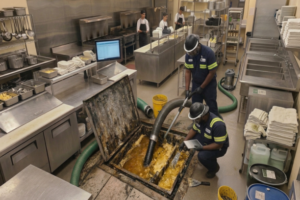
Keeping up with a regular septic tank pumping schedule prevents that buildup from becoming a real problem by removing the accumulated sludge and restoring the tank’s capacity.
Without that upkeep, the system gradually loses its ability to function as it was designed.
Sludge and Scum Buildup Over Time
Every time water enters the septic system, small amounts of solid material settle inside the tank. Over months and years, this material forms thick layers.
At first, it causes no obvious problems because the tank still has enough space to separate wastewater effectively.
Over time, however, two important changes occur.
- The sludge layer at the bottom becomes thicker.
- The septic tank scum layer at the top expands.
As these layers grow, the liquid treatment zone in the middle becomes smaller.
Tank Condition | What Happens Inside |
| Early stage | Normal separation of waste |
Moderate buildup | Reduced tank capacity |
| Severe buildup | Solids move toward the outlet pipe |
This process leads to septic tank capacity reduction, which makes the system less effective at handling wastewater.
According to the U.S. Geological Survey, untreated household wastewater can introduce contaminants into nearby groundwater when septic systems are not properly maintained.
This risk becomes much higher once sludge levels reach the outlet pipe.
Impact on Baffles and Internal Components
Inside every septic tank are components that help control how wastewater flows through the system. One of the most important parts is the baffle.
Baffles prevent solid material from leaving the tank too early. They guide wastewater downward so that only partially treated liquid exits toward the drain field.
When a septic tank is not pumped, it becomes overloaded with sludge, and these internal components begin to suffer.
Some common problems include:
- Septic tank baffle damagecaused by excess pressure from accumulated waste
- Solid material reaching the outlet pipe
- Reduced wastewater flow through the system
In older neighborhoods such as San Carlos Park and Fort Myers, many septic systems have been operating for decades. When routine septic tank maintenance has been overlooked, inspectors often find damaged or deteriorating baffles inside the tank.
A broken baffle allows solids to escape the tank and enter the drain field.
Once this happens, the problem becomes much more serious.
When Waste Moves Beyond the Tank
A properly maintained septic tank protects the drain field by keeping solid waste inside the tank. When sludge levels become too high, however, solids begin moving toward the outlet pipe.
This leads to one of the most expensive septic problems homeowners face.
Drain Field Contamination
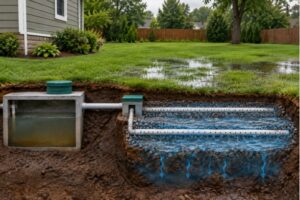
When solids enter the drain field, they clog the soil that normally filters wastewater.
This process can lead to drain field damage from solids, which prevents water from absorbing into the ground.
Stage | What Happens |
| Sludge reaches the outlet pipe | Solids begin escaping the tank |
Solids enter the drain field | Soil pores begin clogging |
| Drain field saturation | Wastewater cannot drain |
Once a drain field becomes clogged, repairs can be extremely expensive.
According to the Florida Department of Health, septic system failures can also increase the risk of groundwater contamination in residential areas.
This is why regular septic tank pumping frequency is considered essential in areas with high groundwater levels, such as Naples and Bonita Springs.
Hidden Warning Signs Homeowners Often Miss
One of the biggest challenges with septic systems is that many early warning signs appear gradually.
Homeowners may notice small changes but assume they are normal.
Here are some signs that a septic tank needs pumping that are often overlooked.
Subtle warning signs
- Drains are becoming slightly slower than usual
- Occasional gurgling sounds in plumbing pipes
- Faint sewage odors outdoors
- Patches of greener grass near the drain field
- Minorseptic tank odor issuesnear yard drains
These problems may not seem serious at first. However, they often indicate that septic tank sludge levels are approaching the tank’s capacity.
Many homeowners only take action when more serious problems appear, such as:
- Septic system backupsinside the home
- Wastewater pooling in the yard
- Strong sewage odors
By that point, the system may already be under significant stress.
Long-Term Consequences of Skipping Pump-Outs
Ignoring routine maintenance can lead to several long-term problems.
Many of these issues begin slowly but become increasingly expensive to fix.
Common consequences of skipping septic pumping
Problem | Result |
| Severe sludge buildup | Reduced system efficiency |
Drain field clogging | Costly repairs or replacement |
| Pipe blockages | Frequent plumbing problems |
Wastewater backups | Sanitation risks inside the home |
| Structural tank damage | Potential system failure |
These are among the most common causes of septic system failure.
Furthermore, there is also the environmental side to consider. When a failing system leaks wastewater into the surrounding soil and groundwater, the effects spread. In coastal communities like Captiva and North Cape Coral, where groundwater and surface water are tightly connected, that concern is even greater.
Routine pumping from a trusted company like Crews Environmental remains one of the most straightforward ways to prevent all of it.
The Simple Step That Protects Your Entire Septic System
A septic system does not require constant attention, but it does require routine care. Pumping the tank at appropriate intervals keeps sludge levels under control and allows the system to operate the way it was designed.
For homeowners across Fort Myers, San Carlos Park FL, Lehigh Acres, Bonita Springs, North Cape Coral, Captiva, and Naples, regular septic tank pumping and maintenance is especially important because regional soil conditions and seasonal rainfall can place additional pressure on septic systems.
Crews Environmental has served Southwest Florida communities for more than four decades, providing septic services including inspections, pumping, and system maintenance. Our experienced team understands the local conditions that affect septic performance and helps homeowners keep their wastewater systems running reliably.
If your system has not been serviced recently, scheduling a pumping appointment is one of the best ways to get ahead of serious problems before they escalate. Call our team today at 239-329-8996 and speak with professionals who understand what Southwest Florida homes actually deal with when it comes to septic care.