Across the United States, more than 21 million homes rely on septic systems to handle everyday wastewater. Most of the time, these systems operate quietly in the background, which is why many homeowners rarely think about them until something goes wrong.
The challenge is that septic problems usually begin long before any visible warning signs appear. Inside the tank, solids slowly build up, internal parts can wear down, and small structural issues may start to develop without anyone noticing.
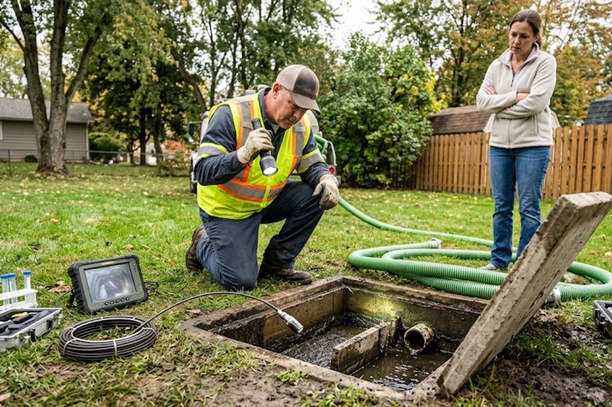
This is where a septic system inspection becomes important. A careful inspection allows professionals to look inside the tank, measure sludge and scum levels, check critical components like baffles, and identify early septic inspection warning signs before they turn into larger problems.
For homeowners in areas like Fort Myers, Lehigh Acres, Bonita Springs, North Cape Coral, Captiva, Naples, and San Carlos Park, routine inspections are especially valuable. Southwest Florida’s high water table and seasonal rainfall can place extra pressure on septic systems, making regular evaluation an important part of responsible home maintenance.
21 Million+ U.S. homes rely on septic systems for wastewater treatment. The EPA recommends a professional inspection at least once every three years, with pump-outs scheduled around household size and water usage.
Structural Condition of the Septic Tank
The tank itself bears the full load of the system, and its physical state is one of the first things an inspector will evaluate. Decades of soil pressure, moisture, and chemical activity from decomposing waste gradually wear away at the tank walls, seals, and access points. A crack that appears minor can allow untreated wastewater to seep into surrounding soil, which is a serious concern in coastal communities like Naples, Captiva, and Bonita Springs, where groundwater sits close to the surface.
Structural Issue | What It Indicates | Why It Matters |
| Cracks in tank walls | Structural weakening | Wastewater can leak into the surrounding soil |
Corroded components | Aging materials | Internal parts may fail or collapse |
| Damaged access lids | Poor sealing | Debris and groundwater can enter the tank |
Tank shifting or settling | Soil movement underneath | Connected pipes can misalign or break |
Table 1: Structural concerns assessed during a septic tank inspection and their real-world implications.
Sludge and Scum Levels Inside the Tank
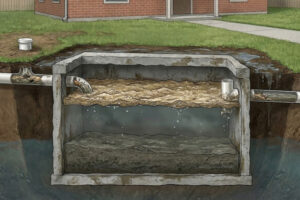
Inside every tank, wastewater separates into layers: heavy solids settle at the bottom as sludge, while grease and lighter material float at the surface as scum. Tracking sludge and scum levels is central to any septic inspection checklist. When these layers build up too much, solids begin migrating toward the outlet and into the drain field, which is a leading cause of system failure.
The EPA recommends pump-outs on a schedule based on household size and usage.
Reading | What It Means | Next Step |
| Low accumulation | System performing well | Continue routine monitoring |
Moderate buildup | Approaching threshold | Schedule a pump-out soon |
| High / minimal outlet clearance | Risk of drain field damage | Immediate pump-out required |
Table 2: Sludge reading thresholds and the recommended response at each level.
Inlet and Outlet Baffle Condition
Baffles are internal fittings that guide wastewater flow and keep solids contained within the tank. When they crack or deteriorate, solid waste travels directly into the drain field. Drain field repairs are among the most expensive interventions in septic maintenance, and in many cases, they trace back directly to a failed baffle that was never caught during a septic baffle inspection.
In older neighborhoods like Fort Myers and San Carlos Park, inspectors frequently find baffles deteriorating in tanks that have been in service for several decades without evaluation. Inspectors typically look for:
- Missing or cracked inlet and outlet baffles
- Irregular wastewater flow patterns inside the tank
- Solid debris is collecting near the outlet pipe
- Visible internal septic tank damage around baffle fittings
Evidence of Leaks or Groundwater Intrusion
Southwest Florida’s wet season and naturally elevated water table make groundwater intrusion septic system problems more common here than in drier parts of the state. When the water table rises in communities like Bonita Springs, Naples, or North Cape Coral, it places pressure on buried tanks. If seals or walls have weakened, groundwater can enter the tank, pushing excess water into the drain field faster than the soil can handle it.
According to the U.S. Geological Survey, failing septic systems can compromise nearby groundwater quality when proper inspection and maintenance are not in place.
During a professional septic inspection, technicians look for several indicators that suggest groundwater intrusion or internal leaks:
- Unusually high liquid levels inside the tank despite normal household water usage
- Water entering through cracks, seams, or pipe connections in the tank walls
- Saturated or unusually soft soil around the tank or drain field area
- Diluted wastewater inside the tank, which may indicate external water mixing with system contents
These findings often appear in septic inspection report findings when groundwater infiltration is occurring. Detecting them early helps prevent larger septic system performance issues, including drain field overload and potential environmental contamination.
Overall System Function and Red Flags
Beyond individual components, a thorough professional septic inspection evaluates how the entire system behaves. Inspectors trace the full path waste travels — from the home, into the tank, and out to the drain field — noting anything that disrupts that flow. These behavioral septic inspection warning signs are often the earliest indicators of performance issues before they escalate into signs of septic system failure.
Internal Issue | Observable Warning Sign | Urgency |
| Sludge overflow toward the outlet | Slow drains, gurgling pipes throughout the home | High |
Broken or missing baffle | Recurring backups, solids in the drain field | High |
| Groundwater intrusion | Saturated soil or standing water above the tank | Moderate |
Tank cracks or leaks | Persistent sewage odors, unusually green grass above the system | Moderate |
| Early sludge buildup | Mild drainage slowdown, no other symptoms yet | Low — Act Soon |
Aging or corroded parts | No immediate symptoms, but the system is near end of its service life | Low — Plan Ahead |
Table 3: Septic inspection red flags: internal issues mapped to visible warning signs, with urgency levels to guide homeowner decisions.
The Florida Department of Health notes that early detection through routine inspection is one of the most effective ways to prevent septic problems from becoming environmental hazards.
Snapshot: A Basic Septic Inspection Checklist
A standard septic inspection for homeowners follows a structured sequence. Here is what that septic inspection process typically covers, and what each step is designed to reveal:
Step | What the Inspector Does | What It Reveals |
| Tank access | Locates and opens lid safely | Physical access and lid condition |
Layer measurement | Measures sludge and scum depth | Whether pump-out is needed |
| Baffle check | Examines inlet and outlet baffles | Whether solids are properly contained |
Leak detection | Looks for cracks, failed seals, standing water | Groundwater entry or wastewater escape |
| Drain field observation | Walks yard above the drain field | Surface saturation or vegetation changes |
Report documentation | Records all findings in writing | Delivers clear septic inspection report findings |
Table 4: Steps in a standard septic inspection checklist used by professional inspectors across Southwest Florida.
Final Thoughts: Why Regular Septic Inspections Matter
A septic system that runs quietly underground can give homeowners a false sense of security. Because problems develop out of sight, they are easy to ignore until the damage has already spread. A routine septic maintenance inspection removes that uncertainty and gives homeowners a documented, accurate view of what is happening beneath their property.
Crews Environmental has been serving communities across Fort Myers, Lehigh Acres, Bonita Springs, Captiva, Naples, North Cape Coral, and San Carlos Park for more than 40 years, providing inspections, pump-outs, repairs, installations, and drain field services with a consistent commitment to safety and environmental responsibility.
Ready to schedule a septic tank inspection?
If your system has not been professionally evaluated in the past three years, now is the right time. Contact us at 239-766-5469 to speak with a team that understands Southwest Florida’s soil, groundwater, and septic infrastructure firsthand.