Fifteen years is a long time to assume everything underground is fine. When a septic tank goes down, there’s no alarm, no warning light, no notification. The sludge keeps rising, the drain field keeps accepting what it was never meant to, and the system keeps breaking down until the day it can’t anymore. By then, septic tank pumping neglect has turned a straightforward maintenance task into a repair that touches every component of the system.
Crews Environmental has opened tanks that tell that exact story, and the damage was always avoidable.
In this blog, we’ll take a walk through what we found inside a tank that went 15 years without service, how the system works, what neglect really does to it, why Florida makes it worse, and what you can do right now before the damage becomes irreversible.
How a Septic Tank Is SUPPOSED to Work
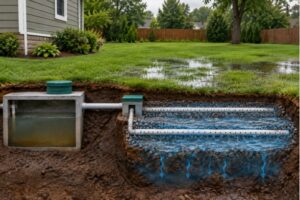
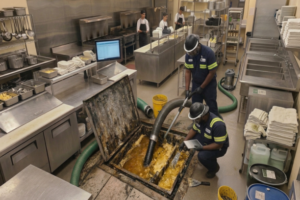
Wastewater flows into the tank and settles into three layers. The solids fall to the bottom, creating sludge, the fats float to the top, creating a scum layer, and the clarified liquid in the middle flows out through the outlet baffle into the drain field, where microbes in the soil filter it clean. Bacteria inside the tank partially decompose the solids, but they can’t eliminate sludge entirely. That’s what septic tank pumping is for. Without it, the sludge layer rises until it reaches the outlet pipe, and from that point, solids begin entering the drain field. Once that happens, the system enters a failure sequence that a pump-out alone cannot reverse.
What 15 Years Without Pumping Actually Looked Like
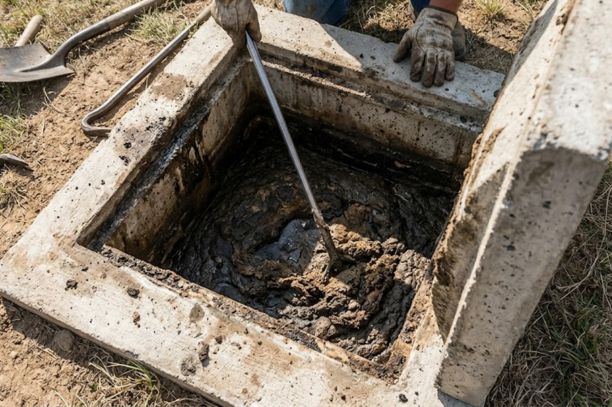
When we lifted the lid, the middle liquid layer had nearly been displaced entirely. Here’s what we documented:
- Sludge is within inches of the outlet pipe with almost no separation remaining.
- A thick, hardened scum crust compressing for over a decade
- A completely blocked effluent filter.
- Overwhelming septic tank odors from gas with no proper venting path.
- Standing water near the septic tank indicates full drain field saturation.
- Root intrusion through tank wall cracks.
- Effluent surfacing above ground near the drain field trenches.
What made this case severe was that septic tank sludge buildup had been pushing solids into the drain field for years before any surface symptoms appeared. By the time the backups were undeniable, the damage underground was already done.
What you smell outside isn’t just unpleasant; it’s your system telling you it has already crossed a line.
Warning Signs the Homeowner Ignored
These septic system warning signs didn’t appear overnight. They built up over the years, and the homeowner thought everything was fine.
1. Slow Drains Throughout the House
Slow drains are often the first indicators of a clogged septic tank. When the tank is almost full, there is nowhere for the water to go, so it moves slowly. Most homeowners blame the plumbing.
2. Toilets Bubbling or Gurgling
Pressurized air being forced back through the system means the tank is under strain. This is not a plumbing quirk; it’s a septic tank problem signaling an overloaded system.
3. Sewage Smells Outdoors
When gases can’t escape through proper venting, they push out through the soil and tank lid. A persistent sewage smell in yard areas is a direct warning, not a seasonal nuisance.
4. Wet Spots in the Yard
Soggy ground above the drain field means the soil has absorbed more effluent than it can handle. This is a drain field failure becoming visible on the surface.
5. Frequent Backups
Recurring septic tank backup across multiple fixture points to a tank that has been overwhelmed for an extended period, not a one-time blockage.
6. Grass Growing Faster Over the Tank
Unusually lush growth directly above the drain field is a textbook sign of septic tank overflow. The nutrients in leaking effluent are fertilizing whatever grows above it.
The Damage We Found
Once the pump-out was complete, the full scope of damage came into focus:
- Clogged outlet baffle: completely sealed with compacted solids
- Solids in the drain field pipes: bypassing the baffle for an unknown period
- Biomat layer across drain field trenches: a dense, tar-like biological crust sealing off soil absorption entirely
- Pipe blockages: at multiple distribution points
- Tank corrosion: from years of hydrogen sulfide gas exposure
- Structural compromise risk: from sustained internal pressure
The biomat discovery was important. This impermeable layer lines the trench walls, clogging the soil pores on which the system depends. Pumping the tank removes sludge, but does nothing to rehabilitate a drain field damaged by biomat. That requires a different intervention. This is precisely why a septic system failure at this level rarely ends with one service call.
The Repair Costs Could Have Been Avoided
Service | Scope |
| Routine septic tank pumping every 2–3 years | Scheduled, predictable, minimal disruption |
Effluent filter cleaning | Fast, inexpensive, prevents blockages |
| Early septic system inspection | Catches damage before it compounds |
Outlet baffle replacement | Manageable when caught early |
Drain field biomat remediation | Extensive, disruptive, significant |
| Full drain field replacement | Major property disruption, entirely avoidable |
The gap between the top and bottom of that table is the true septic repair cost of neglect.
Why Florida Septic Systems Fail Faster
Septic tank problems escalate differently in Southwest Florida. The environment here stacks the deck against neglected systems in ways that homeowners in other states simply don’t face.
1. Heavy Rain
When saturated ground can no longer absorb effluent, the drain field backs up. A healthy system recovers. An overloaded one does not.
2. High Water Tables
Research in Lee County found more than 90% of drain fields in aging North Fort Myers systems sat less than 2 feet above the seasonal high water table, below the EPA’s own recommended minimum. That margin leaves almost no room for proper filtration.
3. Sandy Soil
Sandy soil drains quickly. However, the water moves through so fast that contaminants do not have enough contact time with the soil to be filtered before reaching the groundwater.
4. Hurricane Flooding
Flood events push surface water directly into tanks through cracks and lid gaps, introducing volume the system was never designed to absorb, accelerating septic tank issues significantly.
5. Increased Bacterial Imbalance
Antibacterial soaps and household bleach kill the anaerobic bacteria responsible for waste breakdown inside the tank. Without them, septic tank sludge buildup accelerates far faster than normal.
6. Seasonal Population Surges
Communities like Captiva and Naples see dramatic seasonal population increases, placing far more demand on systems often sized for year-round occupancy only.
Florida doesn’t give neglected systems the benefit of the doubt. The climate, soil, and water table all accelerate what neglect has already started.
How Often Should a Septic Tank Be Pumped?
Crews Environmental recommends septic tank pumping every two to three years for most households. With the water table and rainfall patterns in Florida, it’s always the safer call to be on the shorter end of that window.
Household Size | Recommended Frequency |
| 1–2 people | Every 3–4 years |
3–4 people | Every 2–3 years |
| 5+ people | Every 1–2 years |
Any system already showing signs of a septic tank that is full, slow drains, odors, gurgling, wet spots, should be inspected immediately, regardless of the last service date.
What Homeowners Should Do Right Now
If you don’t know when your tank was last pumped, that’s your answer: Schedule a septic system inspection now. Beyond that: request an effluent filter check at every pump-out, report slow drains or septic tank odors before they worsen, avoid flushing wipes or grease, and reduce water load during heavy rain events.
Homeowners across Fort Myers, Lehigh Acres, San Carlos Park, FL, Bonita Springs, North Cape Coral, Naples, and Captiva can reach our team any time for assessments and emergency septic service.
When Pumping Isn’t Enough
Pumping restores tank volume. It does not repair a corroded baffle, clear a biomat layer, or fix structural damage from sustained pressure. If your system hasn’t been serviced in more than five years, the pump-out is required to be combined with a full septic inspection. Florida professionals can use this to check the integrity of their drain field. Signs that more is needed: backups returning days after service, persistent sewage smell in the yard, or confirmed solids in the drain field pipes.
Florida drain field repair becomes unavoidable when septic tank pumping neglect has progressed to this stage, and every season without service is another season the damage compounds.
Don’t Let Neglect Make the Decision for You
Fifteen years of deferred septic tank maintenance turned a routine pump-out into a multi-component repair involving the tank, baffle, effluent filter, and drain field. The signs that the septic tank is full were present for years. The septic system failure wasn’t sudden; it was scheduled, one missed service at a time.
Crews Environmental offers septic tank pumping, septic system inspection, drain field repair, and emergency septic service across Fort Myers, Lehigh Acres, San Carlos Park, FL, Bonita Springs, North Cape Coral, Naples, and Captiva. With 40 years of experience in Southwest Florida septic services, we’re certified for conventional systems, ATUs, and Performance Based Treatment Systems — available 24 hours a day, 365 days a year.
Don’t wait for your system to force the call. Reach the Crews Environmental team today at 239-766-5469 before the damage reaches a point where pumping alone isn’t the answer.
FAQs
1. Can a septic tank last 15 years without pumping?
A tank can remain in the ground that long, but it will not function safely. Septic drain field problems and hidden damage typically begin well before that timeline ends.
2. What happens if solids enter the drain field?
Solids clog perforated pipes and form a biomat layer on trench walls that blocks soil absorption. Once established, a drain field failure requires remediation or full replacement, not just pumping.
3. Can pumping fix a failing septic system?
Not always. If solids have already reached the drain field, a full septic system inspection is necessary to determine what additional repairs are required beyond the pump-out.
4. What are the signs of septic failure?
Slow drains, gurgling toilets, septic tank backup, sewage smell in the yard, standing water near the septic tank, and unusually fast grass growth above the drain field are the key septic system warning signs.
5. How much does septic repair cost in Florida?
Costs vary significantly based on what failed and how long neglect continued. Routine Fort Myers septic pumping and Naples FL septic inspection are far more manageable than Cape Coral septic repair or full drain field replacement.
6. Can heavy rain make septic problems worse?
Yes. Saturated soil cannot absorb effluent. The high water tables of Southwest Florida limit drain-field capacity even more during the rainy season. Septic tank issues that are dormant in dry months often become acute after storms, making septic pumping for Southwest Florida homeowners especially costly.