Most homeowners find out the hard way that “the tank got pumped” and “the system is maintained” are two very different statements, usually after a drain starts gurgling again a few months later.
Here’s the short version: septic tank pumping clears out one tank, whereas septic system maintenance looks after the entire wastewater treatment system, from the inlet pipe to the drain field. Homeowners across Bonita Springs, Captiva, Fort Myers, Lehigh Acres, Naples, North Cape Coral, and San Carlos Park deal with sandy soil, high water tables, and heavy summer rain, and that mix is exactly why the difference matters here more than in most parts of the country.
Knowing where pumping ends and real maintenance begins can help you catch problems early, spend less on repairs, protect your property’s resale value, and get more usable years out of your residential septic system. This guide walks through both services, where they overlap, and where they don’t.
What Exactly Is Septic Tank Pumping?
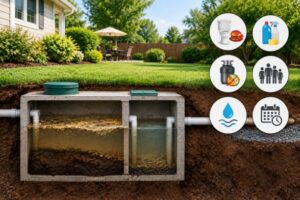
Your septic tank is the first thing wastewater hits after it leaves your house. Solids sink, oils and grease rise to the top, and the liquid in between eventually moves out to the drain field.
That settling process is exactly why pumping exists. Left alone, the solid layer keeps building until it has nowhere left to go but into the drain field, and that’s a far more expensive problem than a routine pump-out.
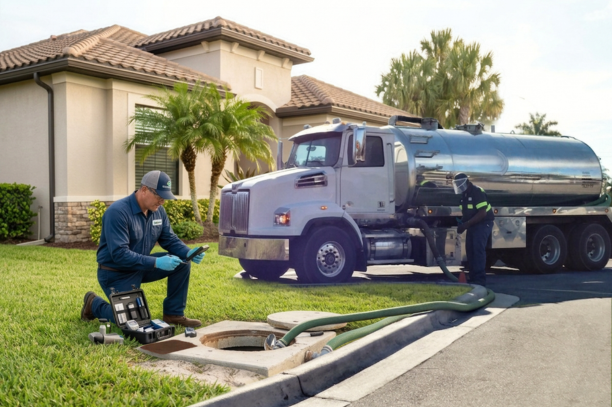
So what actually happens when a technician shows up for a professional septic tank inspection and pumping service?
- Locating and opening the tank
- Removing built-up sludge from the bottom
- Pumping off the floating scum layer
- Clearing out any heavier buildup along the walls
- A quick visual check of the tank’s condition
That last step is worth pausing on. A technician who’s in and out without a second glance is missing a chance to catch a problem while it’s still small.
According to our experts at Crews Environmental, most homes do well with pumping every two to three years, though household size, water use, and tank age all shift that number.
Worth knowing: the EPA’s Septic Smart program lists regular pumping as one of the simplest ways to avoid early system failure.
Septic tank pumping tells you the tank is empty. It doesn’t tell you whether the rest of the system is healthy, and that’s the gap complete maintenance closes.
What Does Complete Septic System Maintenance Include?
A septic system only works well when every part of it is checked, not just the tank. Septic system care means keeping tabs on the tank, the pipes, the baffles, and the drain field as a connected whole.
| What Gets Checked | Why It Matters |
| Septic System Inspection | Gives you a full read on the system’s condition |
| Tank Pumping | Clears sludge and scum before overflow risk builds |
| Baffle Check | Confirms wastewater is flowing the right direction |
| Drain Field Inspection | Flags saturation or early failure signs |
| Leak Check | Catches cracks or structural wear |
| Effluent Filter Cleaning | Keeps the filter from clogging and backing up |
| Performance Review | Confirms the system is treating waste properly |
| Preventative Repairs | Handles small issues before they turn into big ones |
A proper maintenance visit often uncovers issues a homeowner would never spot on their own, at least not until the damage is already visible.
Worth knowing: the EPA reports that roughly one in five U.S. households relies on a septic system, which is part of why routine septic system inspection matters nationwide, not just locally.
Septic Tank Pumping vs. Septic System Maintenance: What’s the Difference?
People use these two terms interchangeably all the time, but they’re doing different jobs.
| Septic Tank Pumping | Septic System Maintenance |
| Clears out waste that’s already built up | Checks the health of the whole system |
| Limited to the tank | Covers every major component |
| Stops the tank from overflowing | Helps prevent system-wide breakdowns |
| Done every few years | An ongoing, year-round process |
| Reacts to current buildup | Catches problems before they start |
| A short-term fix | A long-term protection plan |
Think of septic tank pumping service as an oil change: necessary, but it won’t tell you if your brakes are wearing thin. Maintenance is the full inspection that catches those things. Neither one replaces the other.
Why Septic Tank Pumping Alone Isn’t Enough
A tank can be freshly pumped and still be hiding a real problem underneath, since pumping only ever addresses what’s inside the tank itself.
| The Real Issue | Why Pumping Won’t Fix It |
| Cracked or damaged baffle | Lets solids slip past the tank into the drain field. |
| Root intrusion in buried lines | Blocks or damages pipes underground |
| Clogged effluent filter | Restricts flow and can trigger backups |
| Shifted or cracked pipes | Allows leaks or blockages outside the tank |
None of these show up during a routine pump-out, and none go away on their own. That’s exactly the gap drain field maintenance and full system checks are meant to close.
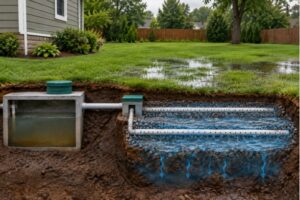
The costliest of these is usually neglect of the drain field. Once solids escape the tank, the surrounding soil can compact to the point where it no longer absorbs wastewater, and that’s a repair on a different scale than a pump-out.
Worth knowing: per the EPA’s guidance on septic system care, systems with consistent upkeep can last for decades, while neglected ones often fail early.
Signs Your Septic System Needs More Than Pumping
Sometimes a pump-out is genuinely all a system needs. Other times, the same symptoms keep coming back, and that’s your signal to dig deeper.
| If You Notice This | It Likely Points To |
| Slow drains in more than one fixture | Blockage or early drain field strain |
| Gurgling from toilets or sinks | Airflow or venting issue in the system |
| Persistent sewage odor | Tank, line, or drain field problem |
| Standing water near the drain field | Drain field saturation |
| Unusually lush, green grass over the field | Effluent surfacing underground |
| Backups shortly after a recent pumping | An issue beyond the tank itself |
Crews Environmental flags these as common red flags worth a professional look. If a problem returns shortly after a pump-out, sludge buildup usually isn’t the real cause, and that’s when a full septic system inspection earns its keep.
How Regular Septic System Maintenance Extends System Life
A septic system built and cared for correctly can run smoothly for decades, and consistent maintenance is what gets it there. The benefits go well beyond simply avoiding a backup:
- Protects the drain field by catching solids before they migrate
- Reduces repair costs, since small issues caught early are far cheaper than a failure caught late
- Improves system performance, so wastewater is treated the way it’s supposed to be
- Preserves property value, since a documented service history is something buyers tend to notice
- Supports the environment by keeping wastewater out of groundwater and nearby waterways
None of these are one-time wins. They add up over years of consistent care.
Best Practices Between Septic Tank Pumping Appointments
Professional visits matter, but daily habits shape how hard your system has to work in between:
- Spread water use across the day instead of running everything at once
- Choose water-efficient fixtures where you can
- Keep grease, oils, paint, harsh chemicals, and non-flushable products out of the drains
- Keep vehicles and heavy equipment off the drain field
- Book periodic inspections instead of waiting for a warning sign
Good septic system care is less about reacting to a problem and more about never letting one start.
How Often Should You Schedule Septic Tank Pumping and Maintenance?
There’s no single schedule that fits every property. Household size, tank capacity, water habits, garbage disposal use, system age, and local conditions all play a role.
| Service | Typical Frequency |
| Septic tank pumping schedule | Every 2–5 years |
| Septic system inspection | Every 1–3 years |
| Drain field evaluation | As conditions call for it |
| Preventative review | Roughly once a year |
Southwest Florida’s rainfall and groundwater levels push some properties toward the shorter end of those windows, especially across Fort Myers, Naples, Bonita Springs, Captiva, Lehigh Acres, North Cape Coral, and San Carlos Park, where proactive monitoring tends to pay off.
Choosing the Right Septic Service Provider
Not every septic tank inspection and maintenance service contractor offers the same depth of service, so it’s worth asking a few questions before you hire one:
- Are the technicians licensed and insured?
- Do they perform full inspections, not just pump-outs?
- Can they handle repairs if something turns up?
- Do they explain pricing clearly before starting work?
- Are they familiar with local soil and groundwater conditions?
- Are emergency services actually available when you need them?
The answers usually tell you whether a company is set up to handle more than a basic septic tank pumping service.
Local experience counts for a lot here. Sandy soil, seasonal rain, coastal groundwater, and regional permitting rules all shape how a system should be maintained, and a contractor who works this area every day understands those factors firsthand.
Crews Environmental has served Southwest Florida for more than 40 years, offering septic tank pumping, inspections, maintenance, repairs, drain field repair, installations, and emergency septic system service to homeowners and businesses across Fort Myers, Naples, Bonita Springs, Captiva, Lehigh Acres, North Cape Coral, and San Carlos Park.
The Smarter Way to Protect Your Septic Investment
A septic system rarely gets attention until something goes wrong, but it’s one of the most important systems on your property. Pumping clears out waste. Real septic system maintenance keeps an eye on everything else, so small issues never get the chance to become expensive ones.
If it’s been a while since your last inspection, Crews Environmental can take a look and tell you exactly where things stand. Call Crews Environmental today at 239-332-1986 to schedule your professional septic tank inspection, pumping, and maintenance service and keep your system running the way it should.