Your septic tank was pumped out less than three years ago. Yet here you are, watching a toilet drain slower than it should and catching a faint odor near the yard every time you step outside. Most homeowners assume every septic tank fills at roughly the same pace, so a surprise like this feels less like bad luck and more like something went wrong.
Two neighboring homes with identically sized tanks can experience very different rates of septic tank sludge buildup depending on water use, household habits, maintenance history, and local conditions. Across Fort Myers, Naples, Bonita Springs, Lehigh Acres, North Cape Coral, San Carlos Park, and Captiva, heavy seasonal rainfall, growing families, vacation properties, and shifting occupancy all affect how quickly sludge accumulates.
Understanding what drives that buildup can help homeowners avoid surprise septic system service calls and protect the system for years to come.
Understanding What Happens Inside Your Septic Tank
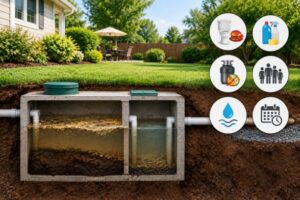
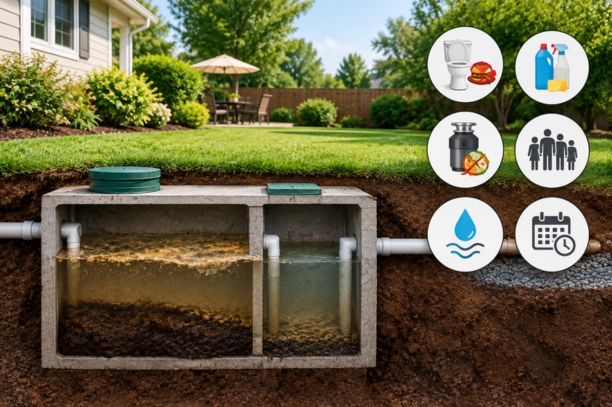
Every time wastewater leaves the house, it enters a quiet but carefully engineered process. Inside the tank, it naturally separates into three layers:
| Layer | What It Contains | Where It Forms |
| Scum | Oils, grease, fats, and floating material | Top |
| Liquid effluent | Partially treated wastewater | Middle |
| Sludge | Heavy solids that settle over time | Bottom |
Only the liquid layer is meant to move on to the drainfield. The sludge layer is not a malfunction; it is a normal part of how a septic system works. The concern is when septic tank sludge accumulation happens faster than expected, eating into the tank’s capacity and raising the odds that solids reach the drainfield. According to the EPA, more than one in five U.S. households rely on septic systems, making routine care a key part of protecting both a property and the groundwater around it.
What Is Septic Tank Sludge?
Septic tank sludge is simply the dense layer of solid waste that settles at the bottom of the tank, including organic waste, food particles, paper products, and small amounts of soil. Bacteria break down some of it over time, but not all of it decomposes, and what remains gradually builds up. That is why routine septic tank pumping service matters: it clears accumulated sludge before it takes up too much of the tank’s capacity.
Quick fact: Crews Environmental recommends septic tank pumping every two to three years, though the right interval depends on tank size, household occupancy, water usage, and system age.
Why Does Septic Tank Sludge Build Up Faster Than Expected?
The explanations tend to fall into a handful of everyday categories, and most homeowners are surprised by how ordinary they are once laid out side by side.
| Cause | Why It Speeds Up Buildup |
| A larger household | More toilet use, laundry, and food-prep waste means more solids overall, and extended guests or seasonal renters can create the same spike temporarily |
| Garbage disposal habits | Coffee grounds, rice, pasta, and eggshells are organic, but they still add to septic tank solids buildup even as bacteria work to break them down |
| Excessive water use | More water does not flush a tank clean; it can disturb the settling process that separates solids from liquid |
None of these habits are unusual on their own, which is exactly why the buildup tends to sneak up on people. A single leaking toilet, for instance, can waste up to 200 gallons of water a day according to the EPA, and that extra volume adds pressure the system was never built to absorb.
How Household Habits Affect Septic Sludge Buildup
| Habit | Potential Impact |
| Frequent garbage disposal use | Adds more solid waste to the tank |
| Heavy laundry days | Increases the water load moving through the system |
| Flushing the wrong materials | Introduces solids that never break down |
| Ignoring plumbing leaks | Raises the volume of water entering the tank |
| Skipping scheduled maintenance | Lets sludge levels climb unchecked |
Even products labeled “flushable” can add to septic tank waste buildup. Wipes, feminine hygiene products, paper towels, dental floss, and grease should stay out of the toilet altogether, since they resist breaking down and can speed up sludge buildup.
Signs Your Septic Tank May Have Excessive Sludge
The trouble with excessive sludge in septic tank conditions is that it develops gradually, and most homeowners notice it only after performance has already suffered. Watch for:
- Slow drains throughout the home
- Gurgling sounds in the plumbing
- Toilets that flush poorly
- Sewage odors indoors or outdoors
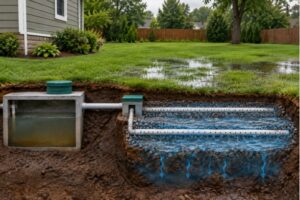
- Wet spots or unusually green grass near the septic area
- Wastewater backups
Worth remembering: one slow drain on its own could just be a plumbing issue. Several fixtures acting up at once is a stronger sign that the septic system itself needs a look.
How Often Should a Septic Tank Be Pumped?
There is no single answer to how often to pump a septic tank. The right septic tank pumping frequency for a given property depends on a handful of factors working together rather than any one number:
- Tank size
- Household size
- Water usage habits
- Garbage disposal use
- Age of the system
The EPA generally points to every three to five years for many households, while Crews Environmental recommends evaluating systems more often, typically every two to three years, depending on actual conditions. Periodic inspection, rather than a fixed calendar date, remains the most reliable way to judge sludge levels in septic tank systems.
Can Septic Tank Pumping Prevent Sludge from Reaching the Drainfield?
In most cases, yes. Regular septic tank pumping service keeps the sludge layer from growing so large that it approaches the outlet leading to the drainfield. Once solids escape the tank, they can clog the soil that the drainfield depends on, and that kind of damage is far harder to reverse than a routine pump-out. This is one reason septic system service on a consistent schedule tends to cost far less, in time and hassle, than repairing a drainfield that has already been compromised.
How to Slow Down Septic Sludge Buildup
- Keep food scraps, grease, and coffee grounds out of the garbage disposal
- Spread laundry loads across the week instead of running several in one day
- Fix leaking toilets and faucets promptly
- Flush only human waste and toilet paper
- Keep up with septic tank maintenance on a schedule that fits your household
When Is Faster Sludge Buildup a Sign of a Bigger Problem?
Occasional faster buildup after a busy season of guests is normal and nothing to worry about on its own. What matters more is whether the pattern keeps repeating rather than settling back down once life returns to a normal rhythm, since that kind of recurring septic tank sludge buildup points to something more than a temporary spike in use.
A repeating pattern is worth a closer look when it shows up alongside:
- Slow drains or gurgling that keep coming back
- Odors that persist even after pumping
- Wet spots or backups that reappear within months of service
At that point, the cause is usually something beyond simple household habits, whether that is a system undersized for the property, an aging tank, or a drainfield already under strain. Staying on top of septic tank pumping on a regular schedule makes it far easier to catch this shift early, but a professional inspection is the only reliable way to identify what is actually driving it.
Stay Ahead of the Sludge, Not Behind It
Septic tank sludge buildup does not have to mean surprise repairs or an unplanned service call. Watching for warning signs, being mindful of what goes down the drain, and keeping a consistent pumping schedule go a long way toward protecting the system. For homeowners across Bonita Springs, Captiva, Fort Myers, Lehigh Acres, Naples, North Cape Coral, and San Carlos Park, FL, Crews Environmental offers Septic tank pumping, inspections, and Septic system service built around each property’s actual needs. If your tank seems to be filling faster than it should, contact Crews Environmental at 239-332-1986 to have it checked before a routine issue turns into a bigger one.