Introduction
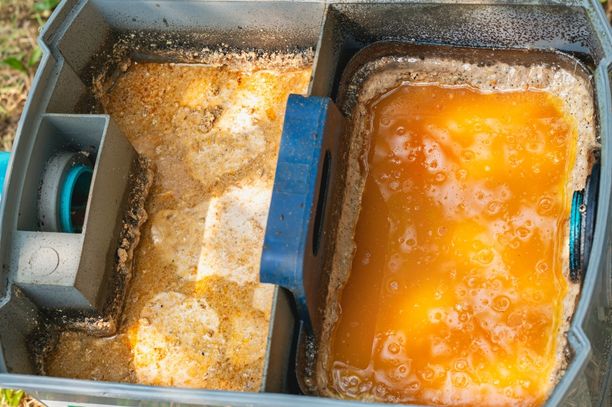
Every shift in your commercial kitchen adds another layer of fats, oils, and grease to your trap. What starts as a thin film becomes a ticking time bomb that explodes with sewage flooding your prep area during Saturday dinner rush. Once your trap hits capacity, you’re facing health violations, emergency plumber bills, potential closure, and customers walking past overflowing drains.
At Crews Environmental, 40 years of rescuing Southwest Florida kitchens has taught us that grease trap cleaning isn’t optional maintenance; it’s your defense against complete disaster.
Whether you run a steakhouse in Fort Myers or a café in Naples, skipping grease trap maintenance creates identical consequences. This guide explains what happens when commercial grease trap cleaning falls off your schedule—from early warnings to shutdown notices.
Grease Buildup Starts Faster Than You Think
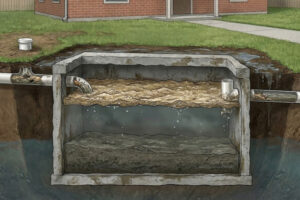
Your grease interceptor cleaning needs start the moment you open. Every strip of bacon, every basket of fries, every greasy pan scraped into the sink sends FOG (fats, oils, and grease) into your trap system.
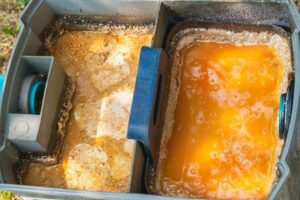
Buildup happens shockingly fast. High-volume kitchens hit the critical 25% capacity mark in three to four weeks. Once your trap reaches one-quarter full, effectiveness drops. Grease that should stay trapped escapes into drain lines, coating pipes, and triggering the disasters ahead.
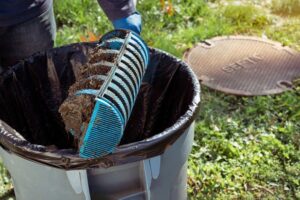
Restaurant grease trap service needs vary by operation. Pizza shops produce different grease volumes than wing joints. Heavy fryer use accelerates the buildup dramatically. We’ve serviced traps in Bonita Springs and Lehigh Acres that were solid after one month of neglect. The 25% rule exists because beyond that point, you’re gambling with your operation.
YOUR TRAP’S BREAKDOWN TIMELINE
- Week 1: Thin layer forms, trap works normally
- Week 3: Hits 25% capacity; ideal cleaning time
- Week 5: Grease escapes into pipes
- Week 7: Drains slow noticeably
- Week 9: System failure imminent
Plumbing Problems Begin Below the Surface
Slow drains in commercial kitchens aren’t just annoying; they signal infrastructure breaking down inside your walls and under your floors.
When grease coats pipes, water flow constricts. Minor delays become standing water in your dish pit. The three-compartment sink won’t drain. Then, sewer backups from grease flood your kitchen with raw sewage during service.
Plumbing damage from grease goes beyond clogs. Decomposing organic matter produces sulfuric acid that eats through cast iron and PVC. Pipes that are supposed to last 50 years break in five. Repairs mean using a jackhammer to break up floors, putting new ones in, and closing for days.
Indoor traps overflow directly into workspaces. We’ve responded to calls in San Carlos Park and North Cape Coral, where overflow contaminated entire kitchens, requiring biohazard cleanup and health reinspection. Connected equipment suffers too; dishwashers won’t drain, garbage disposals jam, and floor drains back up mid-service. Emergency plumber calls during peak hours cost triple the normal rates, before you factor in turned-away customers.
Health and Compliance Risks Increase
This is where skipped grease trap maintenance becomes genuinely dangerous for your business. Health department violations destroy customer trust and your reputation.
Inspectors show up without warning. They look at maintenance records, check the capacity of the traps, look for signs of overflow, check for smells in dining areas, and make sure that the right paperwork is in place for disposal. Missing records? Citation. Overflowing trap? Citation. Foul smells? Shutdown risk. These violations appear on public records that customers check before choosing restaurants.
Wastewater regulations protect municipal systems. When grease enters public lines and creates neighborhood blockages, your business pays for repairs. The FOG control program requires disposal documentation; we provide complete Waste Transfer Notes with every service, proving collected grease went to approved facilities, not storm drains, where it triggers EPA enforcement.
A failed grease trap inspection can trigger immediate closure. Health departments have the authority to shut operations until violations are corrected. Weekend shutdowns destroy revenue and send customers to competitors permanently.
Violation Type | First Offense | Repeat Offense | Worst Case |
| Missing records | Warning/Fine | Escalating fines | Closure order |
Overflow | Citation | Mandatory reinspection | License revocation |
| Environmental | EPA investigation | Daily fines | Criminal charges |
Equipment and Infrastructure Take Damage
Neglected commercial grease traps destroy equipment through failures that compound quickly. Baffles inside your trap separate grease from water. Never cleaned, these corrode and collapse. Replacement means excavation for outdoor units or major kitchen disruption for indoor systems.
Outdoor interceptors that leak dump hundreds of gallons into the soil, causing foundation damage and requiring environmental remediation. Grease trap blockages ripple through connected systems; HVAC spreads foul odors through ducts, pest infestations start around dirty traps and spread to storage and dining areas, floor drain backups damage tile and create hidden mold.
You need to show that you have done maintenance on your equipment to get a warranty. If you don’t follow grease trap pumping according to the manufacturer’s instructions, your coverage will end, and you’ll be responsible for any problems.
Emergency Service Becomes Inevitable
Emergency grease trap pumping shifts from unlikely to guaranteed once you skip regular service. Saturday night, full dining room, then sewage floods your kitchen. We respond to these calls weekly across Fort Myers, Lehigh Acres, Captiva, Bonita Springs, North Cape Coral, San Carlos Park, and Naples.
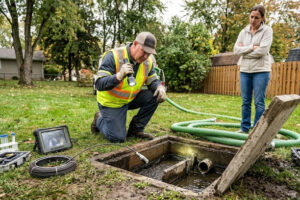
Crews Environmental provides 24-hour emergency grease trap service year-round because disasters don’t wait. Our response minimizes downtime, but professional grease trap cleaning prevents these crises entirely.
The financial hit goes beyond service fees. It includes lost revenue while the business is closed, customers who were turned away finding competitors, bad reviews that will stay online forever, insurance claims that are denied because of preventable neglect, and staff overtime for cleanup. Searching desperately for “grease trap cleaning service near me” during emergencies makes response time critical. Every hour that is closed adds to the losses. Having established relationships with trustworthy providers means faster responses and priority scheduling.
Act Before Problems Escalate
If you skip scheduled grease trap maintenance, it can cause plumbing, compliance, and equipment problems that get worse over time. The 25% rule shows where things stop working and problems start. Regular commercial grease trap cleaning every 90 days prevents disasters, from slow drains in commercial kitchens and sewer backups from grease to health department violations and emergency shutdowns.
At Crews Environmental, four decades of serving Southwest Florida taught us that restaurant grease trap service costs a fraction of emergency repairs, lost revenue, and violation fines. We’re local business owners who understand what’s at stake. Using equipment that causes the least amount of disruption to operations, our team does grease interceptor cleaning in a safe and reliable way. Every service includes complete Waste Transfer Notes and detailed maintenance logs satisfying grease trap compliance requirements.
Don’t let grease trap blockages, health department violations, or emergency grease trap service needs force your hand. Prevention beats crisis every time. Call Crews Environmental at 239-332-1986 for grease trap inspection and service. We serve Fort Myers, Naples, Bonita Springs, Lehigh Acres, North Cape Coral, Captiva, and San Carlos Park, FL with expertise to protect your business before disasters start.