Most homeowners across Fort Myers, Lehigh Acres, and Bonita Springs do not think about their septic system until something forces them to. And that is exactly the problem.
For communities throughout San Carlos Park, Captiva, Naples, and the surrounding Southwest Florida region, understanding what is happening beneath the surface is genuinely protective.
According to the U.S. Environmental Protection Agency, more than one in five U.S. households relies on a septic system for wastewater management. In Florida, where soil conditions and groundwater levels affect system performance, that number carries real weight.
In this blog post, we walk you through exactly what is happening inside your septic tank before a problem surfaces, and what you can do to stay ahead of it.
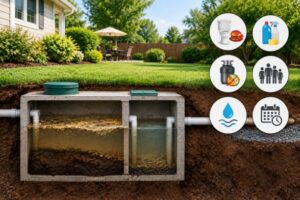
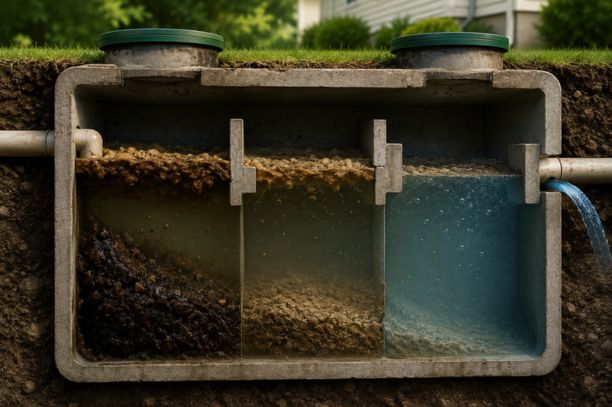
What’s Quietly Accumulating Inside Your Tank Every Day
Layer | What It Contains | Why It Matters |
| Scum Layer | Grease, oils, floating solids | Clogs outlet pipes over time |
Liquid Zone | Partially treated wastewater | Should flow freely to the drain field |
| Sludge Layer | Heavy solids, organic waste | Thickens without regular pump-outs |
These layers are supposed to exist in balance. The trouble starts when pumping is delayed long enough that sludge builds up to unsafe levels, leaving the tank with less room to do its job properly.
This is where the waste breakdown process begins to fall behind. Natural bacteria can only process so much. Beyond a certain threshold, solids start moving where they should not, and drain field performance begins to suffer, creating wastewater buildup that is expensive to reverse.
The EPA notes that when solids accumulate beyond safe levels, they can move into the drain field and cause damage that is expensive to reverse.
The Invisible Stages Before a Septic Problem Appears
Stage 1: Gradual buildup with no visible signs
The tank is functioning but not filling. From the outside, everything appears completely normal. This stage can last for years.
Stage 2: Drain field performance begins to slip
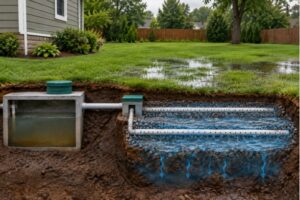
As space inside the tank decreases, partially treated liquid reaches the drain field sooner than it should, and the soil begins absorbing more than it can handle.
Stage 3: System overload becomes real
The tank is approaching or past capacity. During periods of high usage or heavy rainfall common in Fort Myers, sewage backup risks rise significantly.
Stage 4: Indoor symptoms emerge
Multiple fixtures slow down. Odors appear indoors. The plumbing system strain becomes impossible to ignore, and the issue has usually moved well past a simple septic tank pump-out.
Early Warning Signs Most Homeowners Miss
Warning Sign | What It Usually Means |
| Slow drains across the house | Restricted wastewater movement in the system |
Gurgling toilets or pipes | Air trapped from poor drainage flow |
| Wet or spongy yard patches | Oversaturated soil near the drain field |
Persistent outdoor odors | Gases escaping from a struggling system |
| Repeated backups after heavy use | Tank nearing or at capacity |
A single slow drain might actually be a clog. Multiple slow drains throughout the house at the same time almost always point to the septic system. These are the septic tank full signs worth paying attention to.
How a Normal System Turns into a Serious Issue
Most systems that failed were simply not consistently maintained. The habits that create system overload are surprisingly ordinary.
Common habits that put stress on a septic system:
- Running multiple large laundry loads within a short window
- Heavy use of garbage disposals, which adds solid material faster than bacteria can process it
- Flushing anything beyond waste and toilet paper
- Ignoring the recommended schedule forseptic tank maintenance
- Increased household occupancy during holidays, common in Captiva and Fort Myers
According to the U.S. Geological Survey, the average American household uses 80 to 100 gallons of water per person each day, meaning a family of four sends 300 or more gallons into the septic system each day.
The Ripple Effect of a Tank Nearing Capacity
Area Affected | Potential Consequence |
| Plumbing Fixtures | Slow sinks, tubs, and toilets throughout the home |
Yard and Landscaping | Wet patches, soft ground, unpleasant odors outdoors |
| Drain Field | Soil saturation, reduced filtration capacity |
Property Costs | Emergency repair bills that could have been avoided |
The longer pressure builds without a septic tank cleaning service call, the more likely it becomes that the drain field absorbs damage it cannot easily recover from. In San Carlos Park and North Cape Coral, where ground saturation after seasonal rains is already a factor, a struggling septic system only compounds the problem.
The Florida Department of Health recommends regular inspection and pumping of septic systems to protect individual properties and the surrounding water table.
Why Acting Early Saves You from Costly Repairs
Routine septic care is almost always less expensive than the repairs that come from skipping it.
Routine Maintenance | Emergency Scenario |
| Scheduled septic tank pumping | Unexpected sewage backup |
Regular inspections every 3 years | Major drain field failure |
| Lower, predictable costs | Costly excavation and repair bills |
Longer septic system lifespan | Contamination and health risks |
Preventative maintenance is about keeping a system healthy while it is still easy to do so. A scheduled septic tank pump-out every two to three years gives technicians a chance to evaluate sludge levels and make small corrections before they become large ones, extending the overall septic system lifespan significantly.
Before the Backup: What the Smart Homeowners in Southwest Florida Already Know
The warning signs are rarely loud. They show up in the drain that takes an extra second, the smell that lingers after rain, the wet patch near the yard nobody quite investigates.
For residents across Fort Myers, Bonita Springs, Lehigh Acres, Naples, San Carlos Park, North Cape Coral, and Captiva, proactive septic care protects both daily comfort and long-term property value.
Crews Environmental has been serving Southwest Florida since 1982, offering professional septic tank pumping, inspections, drain field repair, installation, grease trap cleaning, and 24-hour emergency service across Lee, Collier, Charlotte, and Hendry Counties. Reach out at 239-332-1986 to schedule a service appointment with our team today.
FAQs
1.How fast does a septic tank actually fill up?
It depends on household size, daily water usage, and tank capacity. Most residential systems need professional septic tank pumping every 2 to 3 years, though households with heavier use will find themselves on a shorter schedule.
2. What exactly builds up inside a septic tank over time?
Two main materials: sludge settling at the bottom and scum floating at the top. Both are normal parts of the waste breakdown process, but they keep accumulating and require periodic removal through a septic tank pump-out.
3. Can a septic tank appear normal while problems are developing?
Absolutely. In the early stages of wastewater buildup, the system can look and feel completely fine from the outside. Trouble often brews for months, sometimes years, before anything visible shows up.
4. What are the earliest signs that my septic tank is getting full?
The earliest septic tank full signs tend to be slow-draining fixtures, gurgling pipes, odors coming from the yard, and patches of grass near the drain field that stay wetter than the rest.
5. How do I know if my septic system is close to failure?
Multiple slow fixtures at once, recurring indoor backups, standing water near the septic area, and odors that will not go away are all serious red flags. If more than one of those is happening at the same time, call someone soon.
6. What happens if I delay pumping my septic tank?
Putting off septic tank maintenance gives sludge more time to overflow toward the drain field. Left long enough, that neglect turns into sewage backup risks, potential groundwater contamination, and a septic system lifespan that gets cut well short.