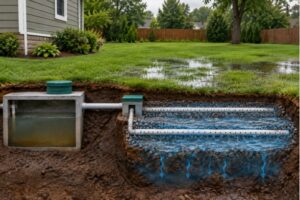
Most homeowners check their roofs, service their HVAC, and check their plumbing, but walk right over one of the most important systems in their home every single day without a second thought. Your septic system doesn’t sound an alarm when something is wrong. It leaves clues on your lawn, in your soil, and in the air around your yard. Miss those clues for long enough, and what started as a manageable repair turns into systemic failure with sewage backing into your home and groundwater seepage into the environment around you.
At Crews Environmental, our team has been reading those clues for over 40 years, and we know exactly what your yard is trying to tell you.
This blog breaks down the science behind what you’re seeing on the surface, what it means underground, and when waiting is no longer an option.
The Subtle Lawn Changes That Signal Underground Trouble
A thriving lawn doesn’t mean everything below it is fine, and that assumption is one of the most common reasons septic drain field problems go undetected until they’re severe.
1. When Green Grass Is Actually a Warning Sign
When effluent distribution lines begin leaking, or a drain field starts backing up, partially treated sewage effluent rises toward the surface. That effluent is loaded with nitrogen, basically fertilizer. The grass on top of it grows faster and greener than anything else around it. That’s wastewater surfacing, and that lush patch you’ve been quietly admiring is guzzling liquid that should never see the light of day. Grass overgrowth patterns concentrated in a single strip over your drain field are one of the earliest septic system yard signs you can observe.
2. What Lawn Discoloration Actually Indicates
Lawn discoloration (yellowing or dead patches) often results from soil compaction over the tank or root intrusion damage from nearby trees whose roots have cracked distribution pipes while chasing moisture. By the time surface damage is visible, the underground disruption has already been underway for some time.
Wet Spots, Patches, and Soggy Areas You Should Never Ignore
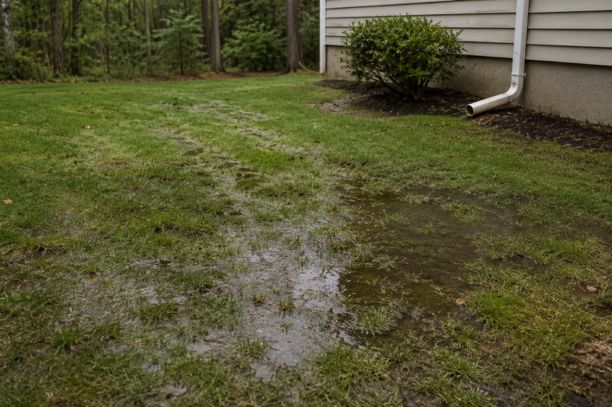
A yard that stays wet without rain isn’t a drainage quirk. It’s a system in distress.
Wet spots in the yard, septic situations are among the most misread signals homeowners encounter. When effluent distribution lines crack from age, root pressure, or soil movement, liquid escapes and rises upward through the soil column, creating subsurface water pooling at the surface. When soil saturation sets in, its soil drainage capacity is gone, the ground cannot take any more effluent, the wet patch grows, and the wastewater surfacing is both visible and dangerous.
In Southwest Florida’s naturally high water table environments, from Fort Myers and Lehigh Acres to Bonita Springs, Naples, San Carlos Park, FL, North Cape Coral, and Captiva, this cycle moves faster than in drier climates. So the soil has less buffer before saturation occurs. This means that surface signs appear earlier and escalate more quickly.
How Drain Field Issues Show Up on the Surface First
The drain field is the most expensive part of your septic system to fix or replace, and it’s the first place where failure shows up above ground.
The Biomat Problem Most Homeowners Have Never Heard Of
Most septic content skips this, but drain field absorption failure is frequently caused not by broken pipes alone, but by a biological layer called biomat. Biomat is a dense, tar-like material that forms naturally along the bottom of drain field trenches. A thin biomat is good. It filters out pathogens before the sewage effluent gets into the groundwater.
But when septic system overload occurs from infrequent pumping or solids escaping an overfull tank, the biomat thickens beyond tolerance. Soil pores seal shut, the bacterial breakdown process that neutralizes pathogens breaks down, and drainage field failure signs begin appearing at the surface.
Surface Sign | What’s Happening Underground |
| Lush green strip over drain field | Effluent rising through soil, feeding grass roots |
Soggy, spongy ground | Subsurface water pooling, soil at saturation limit |
| Yard sewage smell near drain field | Biomat gases or surfacing effluent escaping soil |
Sunken or raised ground | Pipe collapse or root intrusion shifting soil |
| Dried black sludge on grass surface | Biomat overflow from severely clogged trenches |
Underground Pipe Leakage and Root Damage
Underground pipe leakage from cracked distribution lines is another leading cause. Tree roots are aggressive in sensing moisture from effluent and will grow toward it. Once inside the pipes, root intrusion damage fractures the lines and creates concentrated saturation zones that surface as isolated wet patches.
The Hidden Connection Between Soil Saturation and Septic Performance
Your septic system is only as effective as the soil it drains into. The bacterial breakdown process depends entirely on oxygen in the soil. Aerobic bacteria living in unsaturated soil break down pathogens in sewage effluent before it reaches the groundwater. When soil saturation removes that oxygen, aerobic bacteria die, anaerobic bacteria take over, and they produce hydrogen sulfide, the gas you immediately identify as yard sewage smell.
A yard sewage smell is never a cosmetic problem. It signals a breakdown in the filtration process itself, creating a direct environmental contamination risk that threatens local waterways and groundwater seepage into surrounding wells or natural water bodies.
When Yard Signs Mean It’s Time for Immediate Inspection
The difference between a drain field repair and a full replacement is often just a matter of weeks.
These situations require an immediate septic system inspection, no exceptions:
- The persistent yard sewage smell is strongest near the drain field area.
- Standing water over the drain field with any visible discoloration
- Simultaneous slow indoor drains and outdoor wet patches, the system is backing up in both directions.
- Visible wastewater surfacing with liquid pooling on the soil surface
When multiple symptoms appear together, the system is in active failure. Delaying converts a drain field repair service call into a complete drain field replacement. Homeowners across Fort Myers, Lehigh Acres, Bonita Springs, San Carlos Park, FL, North Cape Coral, Captiva, and Naples have called us after waiting too long on exactly these combinations of signs. Early action changes the outcome every time.
Your Yard Has Been Talking. It’s Time to Listen.
Septic drain field problems begin as a slightly green strip of grass and a faintly soft patch of ground. Left unaddressed, they progress through drain field absorption failure, subsurface water pooling, and eventually full wastewater surfacing, a public health hazard and environmental contamination risk that no homeowner wants to face. Every yard sign you see in this blog is a step in that progression. Your options get narrower at each stage, and the resolution gets more invasive.
With 40 years of certified septic expertise, Crews Environmental serves homeowners and businesses throughout Fort Myers, Lehigh Acres, Bonita Springs, San Carlos Park, FL, North Cape Coral, Captiva, and Naples. From routine septic system inspection to targeted drain field repair service, our team arrives prepared, assesses accurately, and communicates clearly, with transparent pricing and no surprises. We are certified, licensed, locally owned, and insured.
If your yard has been sending signals, don’t wait for them to reach your doorstep. Call Crews Environmental at 239-329-8996. We’re available 24 hours a day, 365 days a year, because septic tank issues signs don’t wait for business hours, and neither do we.
FAQs
1. What are the early signs of septic problems in my yard?
The earliest septic system yard signs include unusual grass overgrowth patterns over the drain field, soft or spongy ground, and lawn discoloration, all indicators of early-stage wastewater surfacing that a prompt septic system inspection can still resolve.
2. Why is my lawn suddenly wet or soggy in certain areas?
Soggy ground that appears without recent rainfall is rarely a coincidence. Wet spots in yard septic systems are usually the result of effluent distribution lines that have cracked under root pressure or soil movement, pushing sewage effluent upward rather than outward. Soil saturation and septic system overload from an overfull, long-unpumped tank are the two most common culprits behind this.
3. What does a failing drain field look like on the surface?
A failing drain field rarely announces itself all at once. You might notice subsurface water pooling in one corner of the yard, a strip of grass with dried black sludge at the base, or a yard sewage smell that comes and goes with the heat of the day. These are recognized drain field failure signs, each pointing to either biomat overflow, underground pipe leakage, or both, and each one is a reason to call for drain field repair service before the damage spreads further underground.
4. What causes sewage odor in the yard?
Yard sewage smell results from hydrogen sulfide gases released when the bacterial breakdown process is compromised, caused by biomat thickening, soil saturation killing aerobic bacteria, or direct wastewater surfacing through failed lines.
5. How serious are surface changes caused by septic problems?
Extremely serious. Visible surface changes mean drain field absorption failure, environmental contamination risk, or groundwater seepage is already underway. What appears aboveground has been building underground far longer, making immediate septic system inspection the only responsible response.