That smell after a rainstorm, thick, sharp, impossible to ignore, isn’t coming from the puddles. It’s coming from underground, and it’s telling you that something inside your septic system is already wrong. Homeowners across Southwest Florida dismiss septic smell after rain as a seasonal annoyance, not realizing that every storm is exposing a problem that’s quietly getting worse. Left unaddressed, what starts as a sewage smell outside after rain ends in drain field failure, sewage backup inside the home, and repairs that could have been avoided entirely.
At Crews Environmental, we’ve seen this pattern for 40 years, and we’re here to help you catch it before it reaches that point.
This blog breaks down exactly why rain triggers septic system odor, what’s happening underground when it does, and what steps protect your system before the next storm hits.
Why Rain Affects Septic Systems
Most people think it is the rain that smells. It is not. Rain is a stress test, and your septic system is failing it.
Here’s what actually happens underground during a heavy storm:
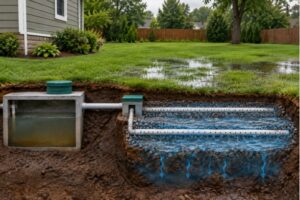
- Once the drain field soil becomes fully saturated, it can no longer absorb the effluent, and it surfaces.
- Rising groundwater infiltrates the tank through cracks or compromised seals, displacing waste and gases upward.
- Barometric pressure drops during storms force sewer gases back through your plumbing, causing a septic smell indoors through toilets and drains.
- Households stuck inside during storms unknowingly spike water usage, overloading a system that’s already under pressure.
Rain doesn’t break your septic system. It shows us what was broken before.
The Most Common Causes of Septic Smells After Rain
Understanding the cause matters because not every septic odor after heavy rain points to the same problem, and misdiagnosing it leads to the wrong fix.
1. Saturated Drain Field
When soil absorbs more water than it can hold, there is nowhere for the effluent to go. It comes out. That wet yard septic smell rising from the spongy ground near your drain field is partially treated wastewater, not harmless moisture.
2. Groundwater Entering the Tank
A watertight seal isn’t optional; it’s the most critical function of a septic tank. If that seal breaks, rainwater gets in, the tank overflows, and solids get pushed to the drain field prematurely. This accelerates septic drain field issues faster than almost anything else.
3. A Tank That’s Already Near Capacity
Septic tank full symptoms, slow drains, gurgling fixtures, sluggish toilets, often go ignored until rain pushes the system over its limit. A full tank has no buffer during a storm. The result is a septic backup after rain that backs up into the home.
If your yard smells fine in dry weather but reeks after rain, your system isn’t failing because of the storm; it was already failing. The storm just made it visible.
Warning Signs Your Septic System Needs Attention
These septic system warning signs tend to appear gradually, which is exactly why they get ignored:
Warning Sign | What It Indicates |
| Sewage smell in yard after rain | Effluent surfacing from drain field |
Toilets gurgling during storms | Pressure backup or blockage |
| Slow drains throughout the house | Tank near or at capacity |
Spongy, wet patches over drain field | Active drain field failure |
| Unusually green grass over drain field | Effluent feeding the surface |
Septic smell indoors after rain | Gas backup through plumbing |
Two or more of these together aren’t a coincidence. It’s a pattern, and it requires a septic system inspection, not a wait-and-see approach.
Why Florida Homes Experience More Septic Odors
Southwest Florida’s geology is stacked against septic systems in ways most homeowners don’t consider. In many areas of the region, the water table is just a few feet below the ground. That table rises fast in the rainy season, June to September, with afternoon storms almost daily. When it does, drain fields that functioned perfectly fine in dry conditions suddenly can’t perform their job.
Sandy soils drain quickly in some spots and hold water in others, creating absorption inconsistencies across the drain field. Add decades-old infrastructure that wasn’t built for today’s household water demands, and heavy rain septic problems become a recurring reality rather than a rare event for many homeowners in this region.
Is Septic Odor Dangerous?
Septic system odor carries a real risk, especially when it migrates indoors. Septic tank gases commonly include hydrogen sulfide, which smells similar to rotten eggs and poses toxicity concerns at high concentrations, and methane, which lacks odor but is combustible. Ammonia is also present and irritates the eyes and respiratory system.
Outdoor septic tank smell after rain is less immediately dangerous, but surfacing effluent contains bacteria and pathogens that make that area of the yard genuinely unsafe for children and pets. In Florida, it’s also a code compliance issue.
What Homeowners Should Do When Septic Odors Appear
The first 48 hours are crucial. Cut household water use immediately; every gallon takes pressure off a stressed system. Keep children and pets out of wet areas of the yard. Don’t try to dig around the tank or drain field. If a septic smell in the yard after rain is noticeable, the underlying cause will still be there when the next storm arrives.
Get a professional evaluation on this. The longer it takes to get a diagnosis, the more damage builds up.
How Professionals Diagnose Septic Odor Problems
At Crews Environmental, diagnosing septic problems during rain starts with the tank and works outward. We locate and uncover the tank, perform a visual inspection, and pump it out completely, both chambers if it’s a chambered system. That process shows the condition of the baffles, tees, effluent filters, inlet, and outlet pipes. We then look at each connection point to ensure it is watertight. One of the most common ways groundwater can enter the tank during storms is through a broken seal.
We then inspect the drain field directly, looking for surfacing water, saturation, septic drain field smell, root intrusion, and compaction. Every component gets evaluated. If something isn’t performing as it should, we document it clearly and spell out exactly what needs to happen. No vague assessments, no inflated scope.
A septic system that only smells during rain is like a roof that only leaks during storms. The storm didn’t cause the problem; it just showed you where to look.
How to Prevent Septic Smells During the Rainy Season
Consistent maintenance is the only reliable protection against septic odor after heavy rain. Pump the tank every two to three years, don’t wait until symptoms appear. Schedule a septic system inspection before the rainy season begins in June, when catching a compromised seal or early drain field saturation still means a straightforward fix rather than an emergency septic service call.
Grade the yard so surface runoff drains away from the drain field, not toward it. Keep trees and large shrubs clear of the absorption area. Spread out high-water-use appliances throughout the day instead of running them simultaneously.
These aren’t straightforward steps. But skipping them turns a manageable maintenance schedule into an emergency.
Stop Blaming the Rain
Septic smell after rain is one of the most misunderstood signals a home can send. The rain isn’t the problem; it’s the pressure test that exposes the problem. Saturated drain fields, compromised tank seals, and systems that are long overdue for service all stay hidden in dry weather. The moment a storm rolls in, the cracks show. And the longer those cracks go unaddressed, the closer you are to a full septic system backup, surfacing sewage, and repairs that could have been prevented entirely.
Crews Environmental has provided full-service septic inspections, pump-outs, drain field repairs, and emergency septic service across Southwest Florida for 40 years. Whether you’re in San Carlos Park, Lehigh Acres, Bonita Springs, Fort Myers, North Cape Coral, Captiva, or Naples, our team is available 24 hours a day, 365 days a year, because septic problems during rain don’t wait for business hours.
If you notice a sewage smell outside after rain or any of the warning signs covered here, don’t wait for the next storm to confirm what this one already told you. Call Crews Environmental at 239-299-8604 and let us find the source before it becomes a crisis.
FAQs
1. Why does my yard smell like sewage after rain?
When the ground is already soaked, the drain field simply can’t take in any more liquid, so effluent pushes upward instead of filtering down. A cracked or poorly sealed tank makes it worse, letting rainwater in and accelerating the overflow.
2. Can heavy rain cause septic backup?
Yes. When the drain field is saturated, and the tank is overfull, effluent has nowhere to go but back toward the home, resulting in a septic system backup.
3. Is a septic odor after rain normal?
A faint, brief odor during extreme weather isn’t always alarming. A strong or recurring wet yard septic smell is not normal and needs professional evaluation.
4. How do I know if my drain field is failing?
Slow drains, spongy ground over the field, unusually green grass, and a persistent septic drain field smell after rain are all indicators of active drain field failure.
5. Can rain fill up a septic tank?
Rain alone won’t fill a properly sealed tank. But a cracked lid, deteriorating seam, or failing inlet connection lets groundwater pour in during a storm, displacing waste and gassing up the system. That’s where the septic tank smell after rain and overflow conditions comes from.
6. Why does my toilet gurgle during storms?
Barometric pressure shifts during storms push gases back through the plumbing. It can also indicate a system under stress from saturation or a full tank.
7. Should I pump my septic tank after flooding?
A well-sealed tank keeps rain out. When the seal is cracked or the lid has shifted, groundwater enters freely during a storm and pushes the tank beyond capacity, which is often what’s behind that sharp septic tank smell after rain the morning after.