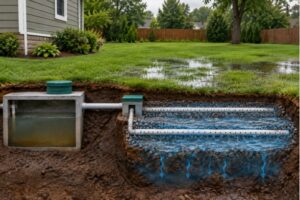

Most homeowners never think about the ground under their drain field until something goes wrong. A septic system’s working parts stay out of sight once installed, but the soil around it filters and absorbs wastewater constantly, and that process depends on the soil type.
Soil type shapes drain field performance more than most people realize. Sandy ground behaves nothing like dense clay, and that difference affects how long a system lasts and how often it needs repair. Knowing what’s happening below the surface helps homeowners avoid unnecessary drain field repair.
Why Soil Matters in a Septic Drain Field
The wastewater leaves the tank and moves through perforated pipes into the soil. Bacteria already living in the ground break it down as it filters through. This wastewater filtration only works when soil drains at the right rate.
Soil that drains too fast lets wastewater through before it’s treated. Soil that drains too slowly floods the system from within. Neither extreme supports steady drain field performance, so soil conditions matter as much during a repair evaluation as before installation.
Common Soil Types and Their Impact on Drain Field Performance
Southwest Florida properties sit on a range of soils, from loose sand to dense clay, and even a well-established clay-soil septic system requires its own repair approach.
| Soil Type | How It Drains | Effect on the System |
| Sandy soil | Very fast | Wastewater may pass through before full filtration |
| Clay soil | Very slow | Water pools near the surface and saturates the field |
| Loamy soil | Balanced | Generally the most supportive of long-term use |
| Compacted or rocky soil | Restricted | Uneven flow adds pressure to the whole system |
A sandy soil drain field moves water fast, but speed isn’t treatment. Wastewater needs contact time with soil particles to filter properly. A clay soil septic system faces the opposite issue, since dense clay holds water instead of releasing it, keeping the field saturated under normal use. Loamy soil for septic systems strikes the right balance, allowing water to move steadily while still giving it contact time with the ground.
Signs Poor Soil Conditions May Be Affecting Your Drain Field
Soil-related problems build slowly. By the time they’re obvious, the drain field has usually been under stress for a while:
- Standing water in yard areas near the drain field after rain
- Grass that’s greener or thicker directly over the field lines
- Slow drains throughout the house, even with normal use
- A sewage smell outdoors that lingers instead of fading
- Ground that stays soft or spongy long after it rains
None of these signs is minor alone. More than one, especially standing water in yard spots that never fully dry, usually means the soil isn’t absorbing wastewater properly.
How Soil Conditions Can Increase Drain Field Repair Needs
Fort Myers sees heavy seasonal rainfall and a high water table, which strains soil that’s already slow to drain. Clay-heavy ground handles normal use fine, but a stretch of storms can push it past its limit, causing the drain field to fail sooner than expected.
Compaction adds another risk. Parked vehicles, foot traffic, and construction near the field press soil particles together, closing off the space wastewater needs to pass through, a common cause behind early septic drain field problems.
These issues rarely stay isolated. A field working harder than it should wears down faster, and unresolved septic drain field problems can turn a manageable repair into a full drain field replacement.
Drain Field Repair Solutions Based on Soil Conditions
There’s no single fix for every drain field, since soil behavior varies from property to property. A repair suited to a sandy soil drain field won’t solve a problem rooted in clay saturation, and loamy soil for septic systems often needs a lighter touch than either extreme. That’s where good drain field repair services earn their value.
Crews Environmental starts every drain field repair by evaluating soil behavior, drainage patterns, saturation levels, and the field’s interaction with the ground. From there, the team decides whether the fix calls for targeted septic system repair, field rehabilitation, or a full drain field replacement tailored to the property’s actual soil conditions.
How Homeowners Can Protect Their Drain Field
Regular septic system maintenance, paired with timely septic system repair, matters no matter what soil a property sits on.
- Keep vehicles and heavy equipment off the drain field area
- Point downspouts and irrigation away from the field
- Spread out water use instead of running several fixtures at once
- Keep tree roots and deep landscaping away from field lines
- Schedule inspections so soil drainage issues get caught early
These habits won’t change a home’s soil, but consistent maintenance reduces the strain that leads to early drain field failure.
When to Call a Professional for Drain Field Repair
Soil conditions aren’t something a homeowner can judge just by looking at the yard. Ground that seems fine on top can be saturated or compacted just below it. If a property near Naples or Bonita Springs shows signs of drain field strain, call in a professional evaluation early.
Crews Environmental has worked with these soil conditions for decades, and that experience shows in how drain field repair services get planned. Coastal sand behaves differently than denser inland soil, and treating them the same way rarely holds up.
The Ground Beneath Your System Sets the Pace
Drain field performance comes down to the soil beneath it doing the work. Sandy, clay, and loamy soil each handle wastewater filtration differently, and knowing which one a property has is the first step toward avoiding repeat repairs. Rainfall and a high water table raise the stakes, which is why septic system maintenance matters more here than in drier parts of the country.
If your yard is holding water, your drains are running slowly, or there’s a smell near the field, don’t wait it out. Contact Crews Environmental for an assessment built around your property’s actual soil, not a guess.