In a busy commercial kitchen, attention stays where it belongs: on the food, the customers, and keeping the line moving. Equipment that works quietly behind the scenes rarely comes up in daily conversations. The grease trap is a perfect example of this.
As long as the sinks drain and the kitchen keeps running, most operators assume the trap is doing its job. The truth is that grease trap problems almost always develop slowly and out of sight. By the time odors appear or drains start backing up, the system may already be well past the point where a simple grease trap cleaning or pump-out service solves the problem. If you’re running a restaurant in Fort Myers, Bonita Springs, Naples, or Lehigh Acres, catching a grease trap problem early can be the difference between a scheduled service call and an emergency shutdown.
Understanding how grease traps work and recognizing the early signs of trouble can give kitchen managers a real advantage. It can help avoid expensive repairs, failed health inspections, and the kind of disruptions that affect both staff and customers.
What Your Grease Trap Is Supposed to Do
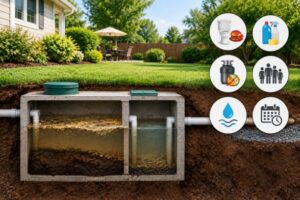
A grease trap intercepts wastewater flowing from sinks, dishwashing stations, and prep areas before it reaches the main plumbing system. Inside the trap, grease naturally separates and floats to the surface, while the treated water drains out through the outlet pipe. The captured grease and solids remain inside until they are removed through scheduled grease-trap pumping and solids and sludge removal.
When the trap is working correctly, it protects the entire downstream plumbing system and keeps the kitchen in line with grease trap compliance requirements. When it is neglected, those protections disappear quickly.
Core Function | What It Does for Your Kitchen |
| Grease separation | Keeps grease out of sewer lines and prevents blockages |
Waste containment | Holds FOG buildup until it can be professionally removed |
| Odor control | Reduces unpleasant smells when the system is properly maintained |
Compliance support | Keeps your operation within local health and environmental regulations |
| Pipe protection | Extends the service life of your commercial kitchen plumbing |
7 Signs Your Grease Trap Is NOT Fine
Most kitchen operators do not realize there is a problem until it becomes disruptive. These are the warning signs worth paying attention to before things escalate:
Slow drains at prep or dishwashing sinks.
Grease thickens as it cools and gradually restricts flow through the trap. When multiple sinks begin draining slowly at the same time, the trap is likely approaching capacity and needs professional restaurant grease trap cleaning.
Persistent odors in the kitchen.
Strong smells near drains or floor traps are a reliable indicator that organic waste is decomposing inside the unit. Regular grease trap odor prevention through scheduled cleaning addresses this before it affects the dining area.
Grease exceeding the 25% rule.
Many health departments use this guideline: once grease and solids occupy roughly a quarter of the trap’s capacity, it is time to clean. Exceeding that threshold reduces trap efficiency noticeably.
Grease Level | System Condition | Recommended Action |
| Below 20% | Normal operation | Continue routine monitoring |
Around 25% | Approaching the limit | Schedule cleaning promptly |
| Above 30% | Trap overloaded | Immediate pump-out required |
Table 2 — Grease level thresholds used during grease trap inspection and the appropriate response at each stage.
Recurring minor clogs.
Repeated blockages are rarely a coincidence. When a trap is overloaded, grease escapes into the downstream plumbing where it hardens and collects debris over time. Consistent commercial grease trap cleaning prevents this pattern from developing.
Grease is appearing in the outlet line.
If grease is showing up beyond the trap itself during an inspection, the system has already failed its primary job. Technicians, especially from credible firms like Crews Environmental, check outlet pipes specifically because grease that reaches downstream pipes increases the risk of larger sewer blockages.
Backups during high-volume service hours.
Kitchens in busy areas like Naples, Fort Myers, and Bonita Springs handle high water volumes during peak hours. A trap near capacity under that kind of load can cause water to rise in sinks, floor drains to bubble, and drainage to slow or stop temporarily.
Violations or concerns noted in health inspection reports.
Inspectors in Southwest Florida review grease management practices as part of routine restaurant evaluations. A history of poor maintenance or an overloaded trap creates compliance exposure that is far easier to prevent than to resolve after the fact.
The Hidden Risks of “It Seems Fine”
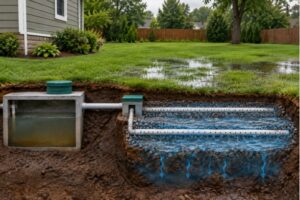
A trap that appears to be functioning normally can still be quietly failing. Grease leaving the trap does not remain liquid but travels into cooler pipe sections, where it hardens and builds up along the walls. Over months, those deposits narrow the pipe until a full blockage forms.
Combined with the corrosive effects of grease mixing with cleaning chemicals and food waste, the long-term damage to commercial kitchen plumbing can be significant.
Several factors make grease trap problems difficult for kitchen staff to detect early:
- Most of the system is hidden underground or inside cabinets, making the buildup invisible during day-to-day operations.
- Grease accumulates slowly, so performance declines gradually rather than all at once.
- Early-stage issues rarely disrupt kitchen activity, allowing problems to continue developing unnoticed.
- Kitchen staff typically only notice symptoms, not the internal causes inside the trap or downstream plumbing.
Beyond the plumbing costs, grease entering the sewer system carries real environmental consequences. According to the EPA, grease buildup contributes to sewer overflows that release untreated wastewater into surrounding areas. For kitchens operating near the coastal communities of Captiva and Naples, proper grease trap waste disposal is also an environmental responsibility.
The table below highlights common grease trap issues, the warning signs kitchen staff may notice, and how urgently they should be addressed.
Underlying Issue | Visible Warning Sign | Risk Level |
| Trap at or beyond capacity | Slow drains across multiple sinks | High |
Grease escaping into the outlet line | Recurring clogs, plumbing backups | High |
| Organic waste decomposing in the trap | Persistent kitchen odors near drains | Moderate |
Grease buildup during peak service | Drainage slows or stops at high-volume hours | Moderate |
| Early-stage grease accumulation | No visible symptoms yet | Low: Schedule Soon |
How to Be 100% Sure Your Grease Trap Is Working
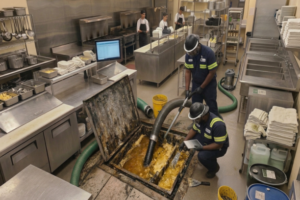
There is only one reliable way to confirm that a grease trap is functioning correctly: routine professional cleaning performed by licensed grease trap cleaners. Visual checks and basic inspections simply aren’t enough to give you a complete picture. A thorough service visit covers every component of the system and leaves no guesswork about its condition.
A standard grease trap service checklist typically includes:
- Grease thickness measurement to assess current capacity usage
- Grease and solids removal using a vacuum truck service
- Inlet and outlet baffle inspection to confirm proper flow control
- Trap capacity monitoring and documentation for compliance records
- Plumbing system integrity check on connected lines
- Safe waste hauling and disposal in line with local regulations
How Often Should You Schedule Cleaning?
The right grease trap cleaning frequency depends on how much your kitchen produces. High-volume frying operations generate more grease than a small café, and local regulations in parts of Southwest Florida may also set minimum service intervals.
As a general guide:
Kitchen Type | Recommended Service Interval |
| Small cafes and light-use kitchens | Every 1–2 months |
Mid-size restaurants | Every 4–6 weeks |
| High-volume or heavy-fry kitchens | Every 2–4 weeks |
Simple Habits That Reduce Grease Buildup
Routine service is essential, but what your team does between visits matters just as much. A few simple habits can extend the life of every cleaning significantly:
- Wipe cookware before washing: scrape pots and trays into the trash before they reach the sink
- Never pour oil directly into drains: collect used cooking oil in a designated container instead
- Use sink strainers at every station: they catch food solids before they reach the trap
- Train staff consistently: a well-informed team follows these habits even during the busiest service hours
None of these replace professional cleaning, but they make a real difference between visits and support a stronger preventative maintenance plan.
Keeping Your Kitchen Running Smoothly
A grease trap that looks fine on the surface can still be quietly building toward a problem. The operators who avoid costly emergency repairs and failed inspections are those who treat grease trap maintenance as a scheduled priority rather than something to address only when things go wrong.
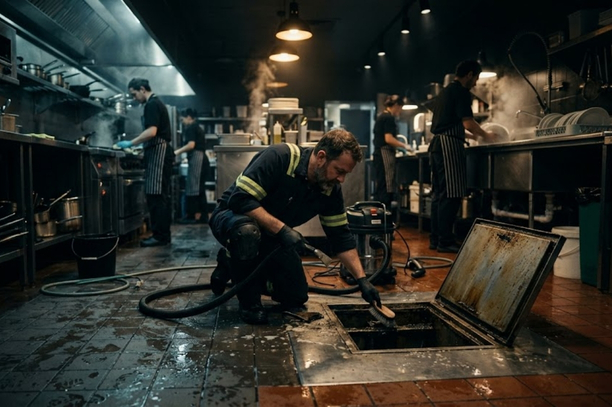
Crews Environmental has been providing commercial grease trap cleaning, pump-out services, and overall grease trap maintenance services for commercial kitchens across Fort Myers, San Carlos Park, Lehigh Acres, Bonita Springs, North Cape Coral, Captiva, and Naples for more than 40 years. Our team uses specialized equipment, including vacuum truck service, and handles all waste hauling and disposal in full compliance with local regulations.
Time to schedule your next grease trap service?
If your kitchen has not had a recent professional grease trap cleaning, now is the right time to arrange one. Contact Crews Environmental at 239-329-8996 to book a service visit and ensure your grease management system runs cleanly, safely, and in compliance with regulations.