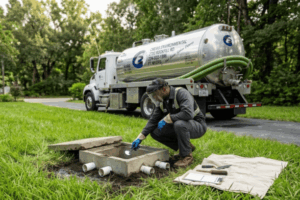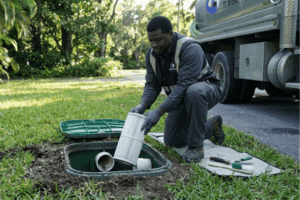
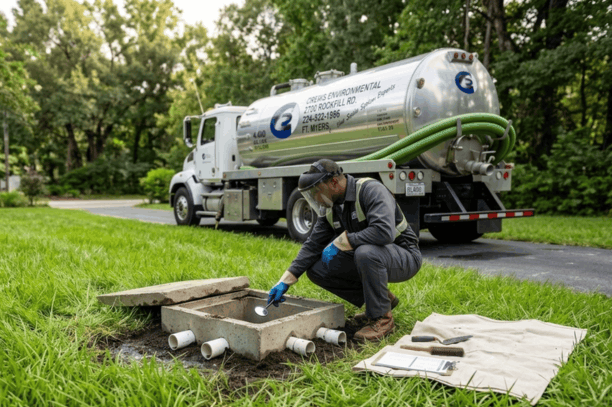
Which part of a septic system decides where every gallon of wastewater goes after it leaves the tank? Many homeowners would point to the drain field, yet the answer is a small chamber most people never see: the septic distribution box. It sits between the tank and the septic drain field and divides the flow among the drain lines, which is why the EPA includes checking it in a thorough septic inspection to confirm that those lines receive equal flow.
When the box tilts, cracks, or clogs, uneven wastewater distribution can overload one section of the field while the rest sits idle. In Southwest Florida, where seasonal rain and a high water table already strain septic system components, spotting trouble early matters.
In this blog post, we explain what the box does, the warning signs of septic distribution box problems, what causes them, and how to prevent them.
What Is a Septic Distribution Box?
A septic tank distribution box, often called a D-box, is a small underground chamber that receives liquid from the tank and sends it into the separate pipes of the drain field. Among all septic system components, it is the one that decides where the wastewater goes next.
- Septic tank: holds wastewater while solids settle.
- Distribution box: divides the liquid among the drain field lines.
- Drain field: spreads the liquid into the soil for final treatment.
Not every system includes a box so that a technician can confirm the layout on your property.
Why Does the Distribution Box Need to Be Level?
Most boxes rely on gravity to share the flow, so their outlets must sit at the same height. If the box settles or tilts, one outlet receives more liquid than the others, and that line begins to carry more than it was built to handle. The total amount of wastewater hasn’t changed, but the load becomes lopsided. A level box means a balanced drain field.
How Does a Septic Distribution Box Work?
The septic system distribution box follows a simple sequence:
- Wastewater enters the tank, where solids settle, and bacteria begin breaking down waste.
- Partially treated liquid leaves through the tank outlet and flows toward the box.
- The box divides that liquid among its outlets, which feed the drain field lines.
- Soil around each line provides further treatment.
This pattern of septic wastewater distribution depends on a level, intact box. When the box fails, septic effluent distribution becomes unbalanced even if the tank is sound, which is why a septic system inspection should evaluate the components together.
Common Signs of Septic Distribution Box Problems
Homeowners rarely see the box itself, so the warning signs show up elsewhere in the yard or the plumbing. These symptoms can point to a faulty box, but they can also come from a blocked pipe, a full tank, or a failing drain field, so a professional should confirm the cause.
1. Sewage or Wet Spots Near the Drain Field
A patch of ground that stays damp long after the rest of the yard has dried deserves attention. After heavy rain in North Cape Coral or San Carlos Park, a wet yard may simply be rainfall, but a spot that stays soggy in dry weather warrants a closer look. Keep people and pets away until it has been checked.
2. Slow Drains or Recurring Backups
Slow drainage in several fixtures, especially with gurgling pipes, suggests a problem beyond one clogged sink. If the drain field cannot accept the incoming flow, a septic system backup may follow, although a full tank or blocked sewer line can look identical.
Quick tip: Note whether one fixture or many are affected, since that detail helps a technician narrow down the cause.
3. Sewage Odors Around the Drain Field
A persistent sewage smell near the tank or drain field can mean wastewater is collecting close to the surface. The EPA lists sewage odors, damp spots, and backups as signs of a failing system, although a blocked plumbing vent can also cause odors. A technician can tell the difference.
4. Uneven Grass Growth Over the Drain Field
If one stretch of your lawn stays noticeably greener and thicker than the grass around it, and it sits over the drain field, take a second look. Extra moisture and nutrients from wastewater can feed the grass in that spot, and the EPA points to lush, spongy grass over the field during dry weather as a possible sign of trouble. Sprinklers, fertilizer, and soil differences can produce the same look, so a patch that keeps showing up week after week tells you more than a single green stripe.
5. Standing Water or Surface Wastewater
Water pooling over the drain field is the most serious sign, especially if it smells like sewage or shows up during a dry stretch. A tilted box, a blocked line, or a field that can no longer absorb liquid might be behind it. Stay out of the water, keep children and pets away, and call a septic professional as soon as you can.
A Quick Guide to Warning Signs
| What you notice | What it may mean | Best next step |
| A wet spot that will not dry | An overloaded line or localized saturation | Schedule an inspection |
| Several slow drains | A broader septic restriction | Reduce water use and call |
| Sewage odor near the field | Surfacing wastewater or a venting issue | Have the source identified |
| A bright green strip of grass | Concentrated moisture | Monitor it and inspect if it persists |
| Standing sewage | Septic drain field saturation or line failure | Stay clear and call right away |
What Causes Distribution Box Problems?
Most faults trace back to ground movement, outside pressure, or solids that should never have reached the box.
| Cause | How it leads to trouble |
| Soil settling or erosion | Tilts the box and throws off the outlet levels |
| Heavy vehicles over the area | Can crack the box or crush connecting pipes |
| Tree and shrub roots | Push into the box and block or displace outlets |
| Skipped septic tank pumping | Lets solids travel out of the tank and clog the lines |
| Flooding or high groundwater | Saturates the soil and can shift the box |
Any of these can lead to distribution box failure, and several are also common sources of septic tank problems. The EPA warns that skipping routine maintenance can let tank solids migrate into the drain field and clog it.
Can You Inspect a Septic Distribution Box Yourself?
A homeowner can safely check the surface for wet or sunken ground, lush grass strips, and odors. Opening the box is a different matter, because septic components can contain toxic gases and wastewater carries health risks. A complete septic system inspection also requires a technician to check the box’s level, structure, and outlet flow. The EPA recommends inspecting the entire system every 1 to 3 years, so build that into your septic system maintenance routine.
How Is a Faulty Septic Distribution Box Repaired?
The right fix depends on what the technician finds.
| Finding | Typical solution |
| Tilted or settled box | Excavate and re-level the box |
| Cracked or deteriorated box | Seal minor damage or install a new box |
| Blocked outlet | Clear the obstruction and check the lines |
| Damaged pipes or an overworked field | Repair the affected lines |
Quick septic distribution box repair may restore balanced flow, while septic distribution box replacement is usually reserved for boxes too cracked or worn to hold. If the drain field has already been affected, Crews Environmental offers drain field repair.
How Distribution Box Problems Can Affect the Drain Field
When one line absorbs more than its share, the soil there becomes overloaded, and the effects tend to spread:
- The overworked section can become saturated while other lines stay underused.
- Wastewater may surface, bringing odors and standing water.
- Recurring septic system drainage problems can appear inside the home.
- The risk of a septic system backup and lasting septic drain field problems increases.
The stakes extend beyond the yard. According to the Florida Department of Health, septic systems serve about 30% of Floridians, and groundwater supplies 90% of the state’s drinking water.
How to Prevent Septic Distribution Box Problems
Consistent septic system maintenance is the best protection, and these habits make the difference:
- Schedule septic tank pumping every 3 to 5 years or as needed, as the EPA recommends.
- Have the whole system inspected every 1 to 3 years.
- Keep vehicles and heavy equipment off the drain field and box area.
- Plant trees and large shrubs well away from the system.
- Spread laundry loads across the week, and keep wipes and grease out of the drains.
When Should You Call a Septic Professional?
Call without delay if you notice:
- Wastewater on the ground or backing up into the home
- A sewage odor that does not go away
- A soggy patch that persists in dry weather
- Slow drains in several fixtures at once
A professional septic system service visit can pinpoint whether the box, the tank, or the field is responsible. Crews Environmental provides 24-hour emergency service, so help is available at any hour.
A Small Box With a Big Say in Your Drain Field’s Future
The septic distribution box may be out of sight, but its balance shapes how well the entire drain field performs, and early attention to wet spots, slow drains, and odors can prevent larger repairs.
For homeowners in Bonita Springs, Captiva, Fort Myers, Lehigh Acres, Naples, North Cape Coral, and San Carlos Park, Crews Environmental, a family-owned company serving Southwest Florida since 1982, offers septic tank pumping, maintenance, inspections, drain field repair, and 24-hour emergency service. Call us at 239-332-1986 to schedule your septic system service today.