Septic systems treat the wastewater of roughly 30% of Floridians, yet one of the smallest parts inside the tank often receives the least attention. A septic tank effluent filter is a removable screen at the tank’s outlet that keeps solids from traveling into the drain field, and the EPA lists Florida among the states that require one. When that screen clogs, wastewater has nowhere to go, and a routine maintenance task can grow into a household emergency.
For homeowners across Southwest Florida, understanding how this filter works and when it needs attention is one of the most practical ways to get more from every septic system service visit and to catch problems before they start.
What Is a Septic Tank Effluent Filter?
A septic effluent filter, also called a septic tank filter or an effluent screen, is a removable device placed at the tank’s outlet to strain the water before it leaves. It is needed because septic wastewater treatment inside the tank is never complete, and fine particles can stay suspended after settling and bacterial breakdown.
The EPA’s technical fact sheet on effluent screens lists Florida among the states that require them, so many local tanks are likely to have one.
Where Is the Effluent Filter Located?
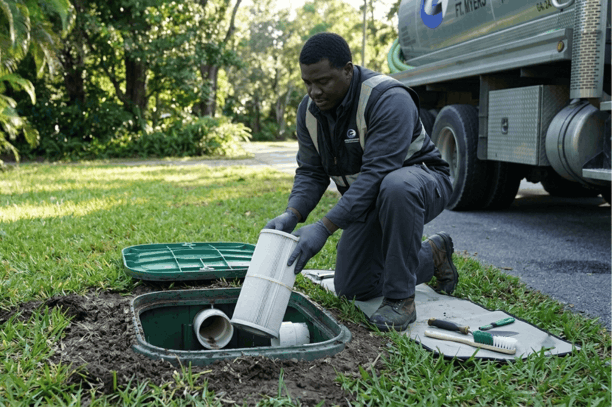
The filter usually sits in the outlet tee on the far side of the tank, or in a separate housing just beyond it, and is accessed through a ground-level opening. Because layouts differ from one system to the next, a technician can confirm where yours is.
Safety note: Septic tanks can contain toxic gases and very little oxygen, so no one should lean into or enter an open tank.
What Does an Effluent Filter Do?
According to the EPA, most screens can hold back solids larger than about 3 mm, or one-eighth of an inch. In practice, that gives homeowners three benefits:
- It keeps larger septic tank solids inside the tank, where they continue to break down.
- It supports septic drain field protection by limiting the particles that reach the soil.
- It gives a technician a convenient checkpoint during a septic tank inspection.
A septic tank effluent filter cannot repair a damaged baffle or replace pumping, but it serves as a dependable first line of defense.
How Does a Septic Tank Effluent Filter Work?
The principle behind how an effluent filter works is simple: water passes through, and anything too large to fit stays behind.
- Everything that goes down the sinks, showers, and toilets flows into the tank, where heavier solids settle at the bottom, and grease floats to the top.
- Meanwhile, bacteria feed on part of the waste, which leaves a fairly clear layer of liquid in the middle.
- As new water enters, that liquid is pushed toward the outlet and has to pass through the slots in the filter.
- Oversized particles remain in the tank, and the filtered liquid moves on to the drain field.
Because trapped material accumulates, the openings eventually narrow. The EPA notes that when a screen plugs, liquid backs up and cannot exit the tank.
Why Effluent Filter Maintenance Matters
Septic systems carry a large share of Florida’s wastewater, and the numbers show why their upkeep deserves attention.
- According to the Florida Department of Health, 30% of Floridians rely on septic systems for wastewater disposal.
- The same agency explains that 90% of the state’s drinking water comes from groundwater, which well-maintained systems help protect.
In Southwest Florida, heavy seasonal rainfall and a high water table across Lee County already place stress on tanks and drain fields. A clogged effluent filter can therefore turn into a septic system backup more quickly than many homeowners expect. Consistent septic filter maintenance keeps the outlet clear and protects the part of the system that is hardest to repair.
How Often Should a Septic Tank Effluent Filter Be Cleaned?
No single schedule fits every household. The EPA reports that most manufacturers recommend cleaning a screen every one to three years, depending on site conditions. The factors below usually decide where a particular system falls within that range.
| Factor | Effect on cleaning frequency |
| Large household and heavy daily water use | More flow carries more solids to the filter, so it clogs sooner |
| Small screen openings or a small flow area | These need attention more often |
| Grease, wipes, and food waste entering the tank | Extra buildup shortens the interval |
| Heavy buildup found at the last inspection | A shorter schedule is usually the wiser choice |
At Crews Environmental, our technicians can assess the system on site and provide a maintenance schedule based on your actual conditions, which is the most reliable way to set a septic tank maintenance routine.
Quick tip: When booking a pump-out, ask whether the septic tank effluent filter will be checked during the same visit.
Signs Your Effluent Filter May Need Cleaning
| What you notice | What it may point to |
| Slow drains in several fixtures | A flow restriction in the plumbing or at the tank outlet |
| Gurgling toilets when water runs elsewhere | A developing drainage problem |
| Wastewater backing up into tubs or floor drains | A serious blockage, possibly at the filter |
| Soggy ground or odors near the tank or drain field | A leak or a failing component |
These signs overlap with other septic system problems, such as a full tank or a blocked sewer line, so a professional should confirm the cause. If sewage is backing up, limit water use and call for help right away. Crews Environmental provides 24-hour emergency septic service every day of the year.
How Is a Septic Effluent Filter Cleaned?
Professional effluent filter cleaning typically follows these steps:
- The technician locates the access point and opens it safely.
- The filter is lifted out in the way its design allows.
- Trapped debris is removed, and the filter is checked for cracks or wear.
- A damaged filter is replaced, while a sound one is returned to its position.
- Outlet flow is rechecked to confirm that wastewater passes freely.
The exact method follows the manufacturer’s instructions, and waste must be handled so it does not contaminate the surrounding property. During septic tank filter cleaning, our technician can also see whether sludge or scum levels call for pumping.
Can You Clean an Effluent Filter Yourself?
Some septic tank effluent filters are designed to lift out for rinsing, and certain models even include an alarm that signals a blockage. Even so, access conditions, wastewater exposure, and the risk of dangerous gases make professional service the safer choice for most homeowners. This is especially true if the filter has never been inspected, its location is uncertain, or the system has a history of backups. Owners whose manufacturer allows hands-on cleaning should follow its instructions, wear protective gloves, and never reach into an open tank.
Effluent Filter Cleaning vs. Septic Tank Pumping
These two septic system services are closely related, yet each solves a different problem.
| Service | Purpose | When it is needed |
| Effluent filter cleaning | Clears the filter so wastewater leaves the tank freely | According to manufacturer guidance and the filter’s condition |
| Septic tank pumping | Removes accumulated sludge and scum from the tank | On the schedule your technician recommends for your tank |
| Septic tank inspection | Checks the tank and accessible parts for wear or damage | At routine intervals or when symptoms appear |
Cleaning the filter does not empty the tank, and pumping the tank does not guarantee a clean filter.
How to Help Prevent Effluent Filter Clogs
Daily habits determine how much material a septic tank effluent filter has to handle. This quick guide is easy to screenshot and share with the whole household.
| Instead of this | Try this |
| Flushing wipes, paper towels, or hygiene products, even when labeled flushable | Flushing only toilet paper and placing everything else in the trash |
| Pouring cooking grease or oil down the sink | Letting it cool and discarding it in the trash |
| Running the garbage disposal heavily | Scraping plates into the trash before washing |
| Washing many laundry loads in one day | Spreading loads across the week |
| Pouring paint, solvents, or medications down any drain | Using a household hazardous waste collection program |
Keeping vehicles off the drain field and directing roof runoff away from it adds further protection. These habits matter across Bonita Springs, Captiva, Fort Myers, Lehigh Acres, Naples, North Cape Coral, and San Carlos Park, where heavy seasonal rainfall already adds stress to septic systems.
Keep Your Septic System Flowing With the Right Maintenance
A septic tank effluent filter is a modest part with a big job, and timely cleaning, regular inspection, and mindful water habits help it do it well. For homeowners in Bonita Springs, Captiva, Fort Myers, Lehigh Acres, Naples, North Cape Coral, and San Carlos Park, Crews Environmental, a family-owned company serving Southwest Florida since 1982, provides septic system service, including inspections, pumping, maintenance, repairs, and 24-hour emergency response.
Call us at 239-332-1986 to schedule your service today.