Most homeowners don’t think about their drainfield until the yard starts telling a different story: a patch of grass stays wet days after the rain stops, one section looks greener than the rest, or a toilet suddenly takes its time to drain. It is easy to explain away, especially during Florida’s rainy months.
That instinct is worth resisting. A wet spot over the drainfield can simply reflect a recent downpour, or it can mean the soil is receiving wastewater faster than it can absorb and treat it. For homeowners in Bonita Springs, Captiva, Fort Myers, Lehigh Acres, Naples, North Cape Coral, and San Carlos Park, FL, where high water tables and heavy seasonal rain are part of everyday life, telling the two apart matters. Understanding what septic drainfield saturation looks like, what causes it, and when it calls for professional septic system inspection can help you respond before a soggy corner of the yard becomes a much bigger problem.
Why the Drainfield Matters More Than You May Realize
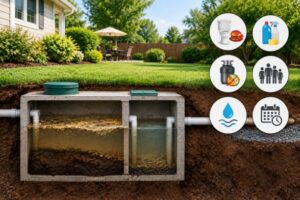
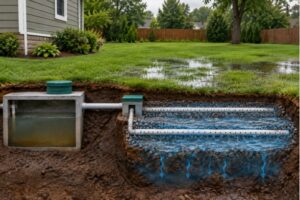
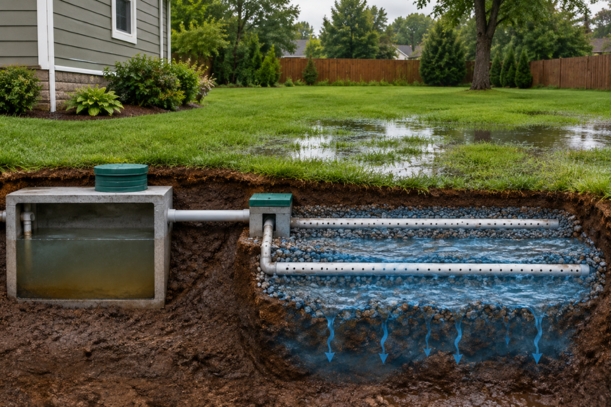
The septic tank doesn’t do the job alone. Wastewater leaves the home, enters the tank, and separates as solids settle and oils rise. The liquid, called effluent, moves on to the drainfield, where the soil filters and treats it on the way down. The EPA explains that a drainfield relies on unsaturated soil to accept and disperse that effluent; when too much liquid arrives or the system clogs, the field can flood and allow septic wastewater to surface or back up into the home.
A few numbers that put the workload into perspective
| Fact | Why it matters |
| More than 1 in 5 U.S. households use septic systems | This is common infrastructure, not a niche setup |
| Indoor water use can reach 70 gallons per person per day (EPA) | A full house can quickly raise the volume a drainfield must absorb |
| A running toilet can waste up to 200 gallons a day (EPA) | Small leaks add pressure the system was never meant to carry |
| 10% to 20% of septic systems fail at some point (EPA) | Overloading and inadequate maintenance are common contributors |
None of this means failure is inevitable, but it does mean the drainfield deserves more attention than an ordinary patch of lawn.
What Does It Mean When a Septic Drainfield Becomes Saturated?
Septic drainfield saturation happens when the soil around the drainfield holds so much water that it can no longer accept wastewater at a normal pace. Under typical conditions, effluent leaves the tank gradually, and the soil has enough unsaturated space to absorb it; once that soil is already full, the process slows down.
The cause can vary. Heavy rain can raise the local groundwater level, a household may send more wastewater into the system than it can process, or compacted soil and an existing septic system problem can interfere just as easily. Crews Environmental’s guidance for the Fort Myers area points to high water tables, heavy rainfall, and local soil conditions as recurring contributors here.
Before assuming the worst, it helps to ask a few quick questions about what you are seeing:
- Has the area had heavy rain in the last day or two?
- Is the wetness limited to the drainfield, or is the whole yard soaked?
- Has this same spot been unusually wet before?
- Are there other signs alongside it, such as odor or slow drains?
A wet yard after a storm is not automatically a septic emergency. What deserves a closer look is wetness that lingers or shows up alongside other warning signs.
What Causes Septic Drainfield Saturation?
A handful of conditions tend to show up again and again:
- Heavy rainfall and high groundwater
The most common factor here. Saturated soil or a higher water table leaves less room to absorb effluent, and the CDC warns that saturated ground during heavy rain can keep a wastewater system from working properly.
- Too much wastewater entering the system
Back-to-back showers, several loads of laundry, and a full house can add up quickly, even without a visible leak.
- Solids reaching the drainfield
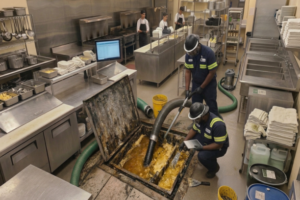
Skipping routine septic tank pumping lets solids migrate in and interfere with treatment.
- Compaction or physical damage
A drainfield is not a parking pad; vehicles or heavy equipment can compact the soil, which is why the EPA advises keeping them off it.
- An aging drainfield
Over 25 to 30 years, the biomat layer can thicken and slow discharge, sometimes leading to ponding or surfacing.
Warning Signs of a Saturated Septic Drainfield
Failure rarely happens overnight. It usually starts small, with a lingering damp patch or a drain that empties a little slower than before. The EPA lists most of the following, including standing water, unusually lush grass, slow drains, and gurgling pipes, among the common signs of a struggling septic system:
- Standing water in the drainfield, especially when the rest of the yard is dry
- A soggy drainfield that stays wet well after the rain has passed
- Grass over the drainfield that looks unusually lush or bright green
- Sewage odors near the tank or drainfield
- Slow-draining toilets, sinks, tubs, or showers
- Gurgling sounds in the household plumbing
- Wastewater surfacing anywhere in the yard, or backups that keep recurring.
Quick tip: Compare the drainfield with the rest of the yard rather than judging it alone. If most of the property dries out after a storm but one section stays wet more than once, track that pattern.
Can a Saturated Drainfield Recover on Its Own?
Sometimes. Temporary septic drainfield saturation from an unusually heavy storm can improve as the ground dries, but that differs from assuming every saturated field will resolve itself.
A field briefly dealing with extra groundwater is not the same as one saturated because of excess wastewater, migrated solids, or physical damage, and waiting for drier weather will not fix those causes. A rough guide can help you tell the two apart:
| What you’re seeing | What it likely means |
| One heavy storm, an isolated wet spot, no other symptoms | Usually clears up on its own as the ground dries |
| Wetness that returns even after dry stretches | Points to something beyond rainfall alone |
| Wetness paired with odor, slow drains, or backups | Not something weather alone would explain |
Crews Environmental notes that Fort Myers-area drainfields can be affected by seasonal rainfall and high water tables, and that waiting too long often makes drainage problems harder to resolve.
What Should Homeowners Do When a Drainfield Is Saturated?
Start by easing off water use. Hold off on nonessential laundry, cut back on water-heavy tasks, and repair obvious leaks. If several fixtures drain slowly or wastewater backs up, reduce water use further and arrange a professional evaluation. Keep children and pets away from any surfaced sewage, since the EPA warns it can carry harmful pathogens.
Septic tank pumping alone will not necessarily solve a saturated drainfield. A professional assessment is the most reliable way to determine whether the issue lies with the tank, wastewater flow, the soil, or the drainfield itself. Crews Environmental lists septic system inspection, septic tank pumping, septic repair, and drain field repair among its services, along with 24-hour emergency service.
What not to ignore
| Warning sign | Best response |
| One wet spot right after a major storm | Keep an eye on it as the ground dries. |
| The same area staying wet again and again | Schedule a professional assessment. |
| Sewage odor near the drainfield | Have the system evaluated |
| Slow drains throughout the home | Cut back on water use and call for service |
| Wastewater surfacing in the yard | Keep people and pets away and get help promptly |
| Backups that keep recurring | Treat it as an ongoing issue, not a one-time event |
How Septic System Maintenance Can Help Prevent Drainfield Saturation
Good septic system maintenance is less about reacting to a bad smell and more about catching small issues early. The EPA generally recommends inspecting every one to three years and pumping every three to five years, depending on tank and household size. Crews Environmental recommends a tighter two-to-three-year schedule for many properties, based on tank size, age, and usage, a reminder that a septic system maintenance plan should fit the actual system rather than a generic calendar.
- Track the date of your last septic tank pumping
- Schedule a septic system inspection at reasonable intervals
- Watch for slow drains, odors, standing water, and gurgling
- Spread out heavy water use across the day
- Repair leaking plumbing promptly
- Keep vehicles and heavy equipment off the drainfield
Staying ahead of small issues makes it easier to catch changes before the system moves toward drainfield failure, and preventive care is generally the simpler path compared with repairing a failed system.
When Does a Saturated Drainfield Need Repair?
The answer depends on why the field is saturated. Temporary groundwater saturation from a heavy storm may only need monitoring and an evaluation. Saturation that keeps returning calls needs investigation to identify the actual driver.
A professional septic system inspection typically looks at:
- The age and condition of the system
- How well the tank and drainfield are performing
- The surrounding soil conditions
- Wastewater flow through the system
- Any signs of physical damage
Crews Environmental’s approach weighs factors such as soil absorption capacity and drain line condition rather than applying one fix to every situation, and it provides drain field repair throughout Fort Myers, Lehigh Acres, Naples, San Carlos Park, Bonita Springs, Captiva, and North Cape Coral for residential and commercial customers. The goal is to understand why the system is struggling, not just make a wet spot disappear for a week.
Keep Your Drainfield on Solid Ground
A wet drainfield isn’t automatically a crisis, but it is not something to shrug off when the same spot keeps returning. Septic drainfield saturation, slow drains, standing water, odors, and recurring backups are all signals worth taking seriously.
For homeowners across Bonita Springs, Captiva, Fort Myers,Lehigh Acres, Naples, North Cape Coral, andSan Carlos Park, FL, staying current on septic system maintenance service and calling in help early can be the difference between a minor fix and a major disruption.
If your drainfield has been staying wet longer than it should, contact Crews Environmental at 239-299-8604 for a septic system inspection, septic tank pumping service, or drainfield repair, whichever fits your system.