A restaurant that looks completely under control on the dining floor can still be running into trouble behind the kitchen doors. One of the most common blind spots is the grease trap, and specifically, the assumption that a set cleaning date on the calendar is all the protection it needs.
A fixed schedule works fine when a kitchen’s output stays roughly the same month to month. The problem is that it rarely does. A busy weekend, a new fried item on the menu, or a stretch of catering orders can push grease production well past what the last cleaning date accounted for. For restaurants across Fort Myers, Naples, Bonita Springs, Captiva, Lehigh Acres, North Cape Coral, and San Carlos Park, seasonal tourism alone can be enough to throw a fixed schedule off track.
The operators who avoid backups, odors, and compliance headaches tend to be the ones who treat grease trap cleaning as something tied to how the kitchen is actually running, not just what’s written on the calendar.
What Is a Fixed Grease Trap Cleaning Schedule?
A fixed schedule means the grease trap gets serviced at set intervals, whether monthly, quarterly, or twice a year, regardless of how much grease and food waste have actually built up. It’s an easy system to like, mostly because of what it offers on paper:
| What a Fixed Schedule Offers | Why It Appeals to Restaurants |
| Predictable service dates | Easier to plan staffing and prep around |
| Forecastable costs | Simpler to budget month to month |
| Less day-to-day monitoring | One less thing to track during a busy shift |
The trouble is that restaurant volume doesn’t stay flat, and a schedule built around convenience doesn’t always match what’s happening in the kitchen.
A seafood spot in Captiva can see volume spike hard during tourist season. A Naples restaurant might add more fried items to the menu. A Fort Myers kitchen might pick up a run of catering work. In every one of these cases, grease output shifts well before the next appointment on the calendar rolls around.
Why Restaurant Activity Directly Affects Grease Trap Cleaning Needs
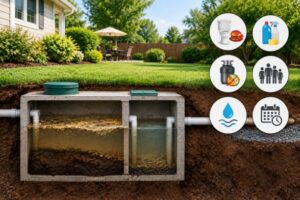
Grease traps are designed to capture fats, oils, and grease before they reach the municipal sewer system. The more cooking and dishwashing that happens, the faster that trap fills.
A few things tend to move the needle the most:
- Customer volume: a kitchen serving 300 covers a day produces meaningfully more grease than one serving 100
- Menu changes: fried foods, grilled meats, seafood, and cream-based sauces all add to grease load quickly.
- Seasonal demand: Southwest Florida’s tourism swings hit restaurant plumbing maintenance needs harder in Bonita Springs, Naples, Captiva, and North Cape Coral than in steadier markets
- Special events and catering: a single large event can push wastewater volume well past a normal week
A trap that sits comfortably below capacity in the off-season can approach its limit fast once business picks up, which is exactly why Restaurant grease trap maintenance works better as an ongoing conversation than a one-time calendar entry.
Signs Your Restaurant Needs Grease Trap Cleaning Before the Next Scheduled Visit
Waiting for the calendar instead of watching for warning signs is one of the more common mistakes in restaurant maintenance. Grease traps usually give some notice before things get serious.
| What You Might Notice | What It Usually Means |
| Slow-draining sinks | Trap approaching capacity |
| Water backing up in kitchen areas | Blockage forming downstream |
| Strong grease odors | Buildup beginning to break down |
| Increased pest activity | Grease residue attracting insects or rodents |
| Gurgling sounds from drains | Airflow restriction in the line |
| Frequent drain clogs | Grease accumulating faster than expected |
If staff is noticing odors before customers ever do, the buildup has usually been developing for a while. Catching it at this stage is a lot less disruptive than waiting for a backup during a dinner rush.
Risks of Relying Only on a Fixed Grease Trap Cleaning Schedule
Most owners only discover the limits of a fixed schedule after something has already gone wrong, and the fallout tends to reach further than a single clogged drain:
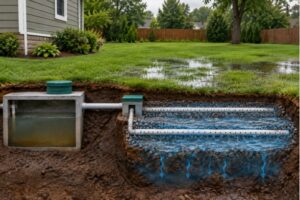
- Overflow risk: as grease builds past capacity, it can bypass the trap entirely.
- Drainage problems: restricted flow leads to slow drains, backups, and service delays right when a kitchen can least afford them
- Odor complaints: for a business built on customer experience, that’s not a small issue.
- Compliance concerns: improper grease management can put a facility at odds with local sewer requirements
- Unexpected costs: emergency service calls are almost always pricier than the proactive visit that could have prevented them
There’s also a compliance angle worth taking seriously. The EPA notes that fats, oils, and grease are among the leading contributors to sanitary sewer overflows nationwide, which is part of why health code compliance and prevent grease trap overflow matter beyond just keeping the kitchen running smoothly.
How to Determine the Right Grease Trap Cleaning Frequency
The more useful question isn’t “how often should this be cleaned,” but “how much grease is this kitchen actually producing right now.”
| Factor | Lower Frequency Needed | Higher Frequency Needed |
| Customer volume | Moderate | Heavy |
| Fried food production | Limited | Extensive |
| Catering activity | Rare | Frequent |
| Seasonal traffic | Stable | Significant |
| Kitchen size | Small | Large |
Many industry professionals point to a general rule: service the trap before grease and solids reach roughly a quarter of the total capacity. Waiting past that point tends to reduce efficiency and raise the odds of a problem.
A few quick questions can help gauge where things stand:
- Has customer traffic increased lately?
- Has the menu changed?
- Are drains running slower than usual?
- Have odors become more noticeable?
A “yes” to more than one of these is usually a sign the current schedule needs a second look.
Best Practices for Managing Grease Trap Cleaning
The most effective approach pairs scheduled service with ongoing attention in between visits.
- Keep an eye on shifts in customer volume, catering orders, and menu changes as they happen.
- Make sure staff know the basics of proper grease disposal and drain protection.
- Hold onto records of service dates and inspection notes so patterns are easier to spot over time.
- Book routine grease trap inspection visits so buildup trends get caught early.
- Plan for seasonal surges you can already see coming, instead of scrambling once they hit.
None of this replaces professional service, but it does make the difference between a schedule that’s working and one that’s just guessing.
How Professional Grease Trap Cleaning Supports Restaurant Operations
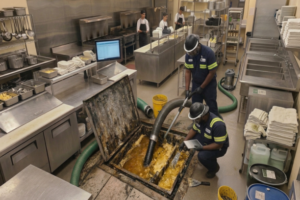
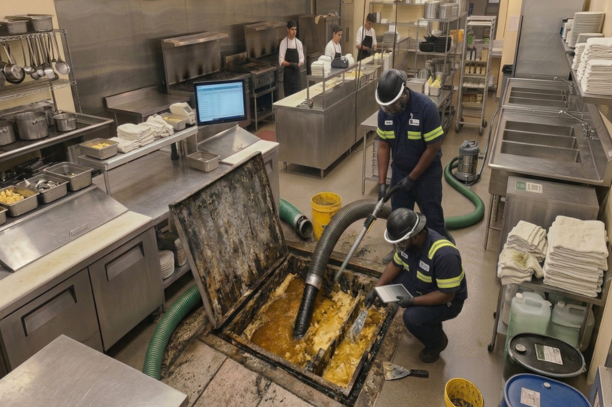
Commercial grease trap cleaning does more than clear out waste. It supports the parts of a restaurant that customers never think about but absolutely notice when something goes wrong.
| Focus Area | What Regular Service Delivers |
| Operational reliability | Smoother wastewater flow, fewer interruptions |
| Restaurant sanitation | Cleaner kitchen conditions for staff and health inspections |
| Drain blockage prevention | Less strain on commercial plumbing services and fewer surprise repairs |
| Kitchen wastewater management | Reduced buildup that can affect commercial kitchen drains |
| Food service compliance | A documented record of responsible facility upkeep |
The U.S. Small Business Administration lists unplanned equipment and infrastructure failures among the top causes of operational disruption for food-service businesses, which is a large part of why Emergency plumbing prevention tends to be far more cost-effective than reacting after the fact.
When Should Restaurants Adjust Their Grease Trap Cleaning Schedule?
Restaurant operations shift constantly, and cleaning schedules should shift with them. It’s usually worth increasing service frequency when:
- Business volume grows significantly
- New menu items raise grease output
- Catering activity picks up
- Tourism season begins
- Kitchen hours are extended
- Drainage issues start showing up
Restaurants across Fort Myers, Naples, Bonita Springs, Captiva, Lehigh Acres, North Cape Coral, and San Carlos Park tend to see these shifts tied closely to tourism and seasonal residents, which makes adaptive scheduling especially useful in this part of Florida. Reviewing the plan quarterly, rather than waiting for a problem to force the conversation, tends to keep service levels matched to what the kitchen is actually producing.
Staying Ahead of Problems Before They Start
The strongest grease trap strategy isn’t the one with the most appointments on the calendar. It’s the one that reflects how a restaurant actually operates day-to-day. As traffic, menu offerings, and kitchen output shift throughout the year, grease disposal best practices should shift too, supporting steadier operations and fewer surprise repairs.
Crews Environmental provides commercial grease trap cleaning for restaurants and commercial kitchens throughout Southwest Florida. If your current schedule hasn’t kept pace with how busy the kitchen has gotten, reach out to Crews Environmental at 239-332-1986 to talk through a maintenance plan built around your restaurant’s real-world volume.